How to Use Nostalgia Marketing to Build Trust and Win More Local Customers
People trust what feels familiar. That’s why nostalgia marketing works so well in marketing.
When someone sees an old photo of your storefront, a throwback version of your logo, or a post about “how things used to be,” it can trigger a positive memory fast. And in a crowded market, that kind of emotional connection matters.
For local businesses, nostalgia is not just for giant brands like Pepsi or Nike. A roofing company, garage door company, fence installer, locksmith, or auto body shop can use it too. The key is to make it feel real, local, and relevant.
Here’s why nostalgia marketing works, when to use it, and how to do it without looking forced.
Why nostalgia marketing works
Nostalgia works because it lowers resistance. People are more likely to trust and respond to something that feels known, safe, and connected to good memories.
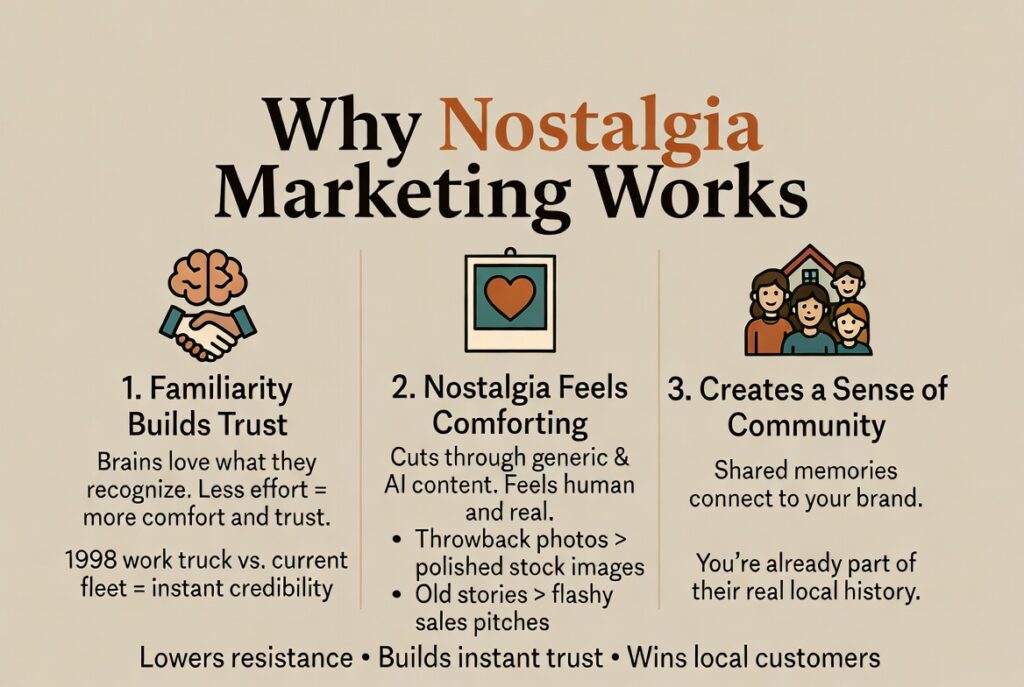
1. Familiarity builds trust
Our brains like what they recognize. A familiar image, sound, style, or story takes less effort to process. That makes people more comfortable with your message.
In plain English: when your marketing feels familiar, prospects are less guarded.
That matters for local service businesses. Most homeowners are already stressed when they need help. If their roof is leaking or their garage door won’t open, they want a company that feels dependable right away.
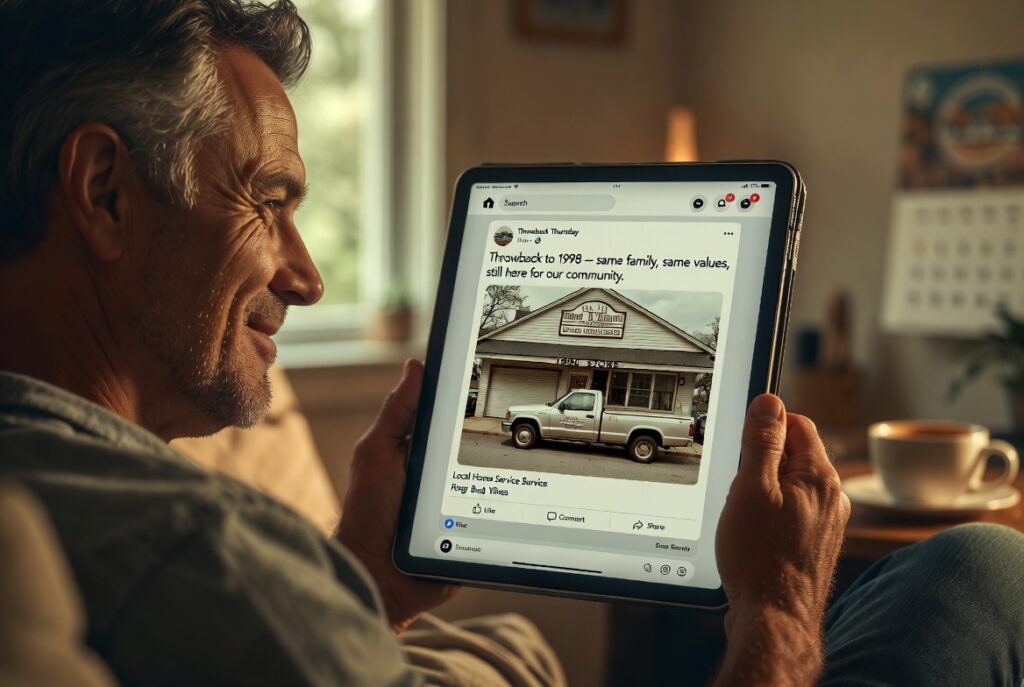
Example: A family-owned handyman company posts a side-by-side photo: their first work truck from 1998 and their current wrapped fleet. That simple post says, “We’ve been here. We’ve done this for a long time. You can trust us.”
2. Nostalgia feels comforting
People are dealing with a lot. Prices are up. Attention spans are down. Everyone is tired of generic ads and AI-looking content.
Nostalgia cuts through that because it feels human.
It reminds people of simpler, more understandable moments. That doesn’t mean the past was perfect. It just means it feels easier to connect with.
What this means for your marketing:
- Throwback photos can outperform polished stock images
- Old customer stories can feel stronger than a flashy sales pitch
- A long-standing local tradition can make your brand feel grounded
3. It creates a sense of community
Nostalgia is rarely just personal. It’s often shared.
People don’t just remember a moment. They remember who they were with, where they were, and what life felt like back then. That’s why local nostalgia can be so powerful for small businesses.
If your company has been part of the neighborhood for years, you already have a built-in advantage. You are tied to real memories in your market.
Example: A local garage door company posts, “Remember when every house in this subdivision had the same builder-grade door? We’ve replaced hundreds of them over the years.” That kind of message feels local, specific, and real.
When nostalgia marketing works in marketing—and when it doesn’t
Not every throwback campaign lands. Some work great. Others feel cheesy, random, or out of touch.
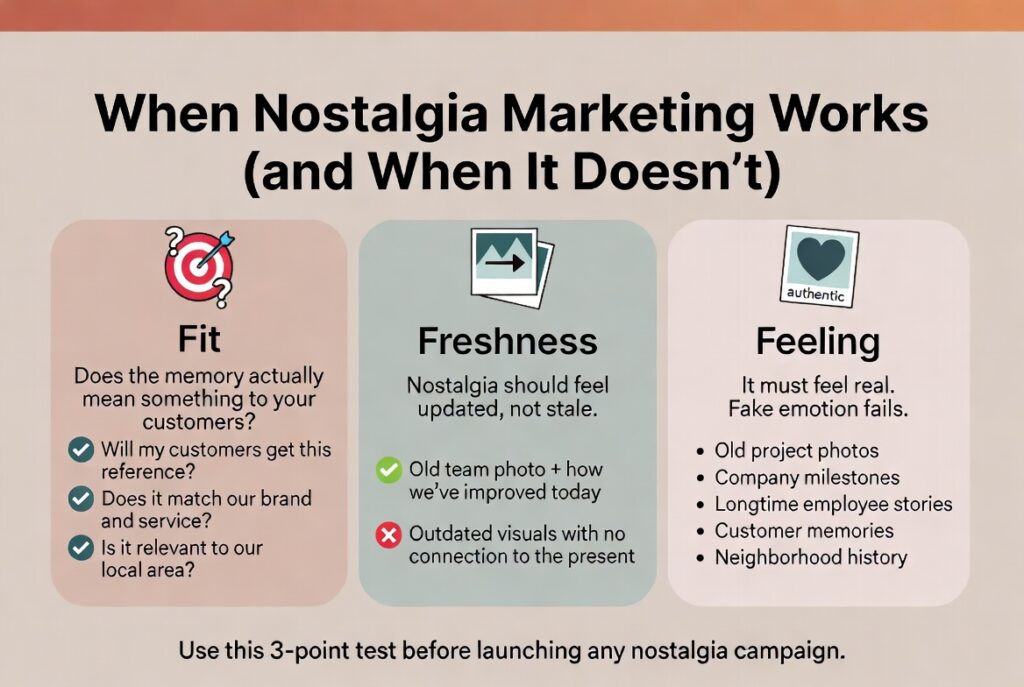
Use this simple test before you launch anything nostalgia-based.
1. Fit
Does the memory actually mean something to your audience?
If your customers are homeowners in their 40s, 50s, and 60s, a post built around 90s or early 2000s references may work. If your audience is younger, it may miss.
Ask:
- Will my customers get this reference?
- Does it match our brand and service?
- Is it relevant to our local area?
2. Freshness
Nostalgia should feel updated, not stale.
You’re not trying to look old. You’re using a familiar memory to make your current brand feel more relatable.
Good approach: Share an old team photo and connect it to how your service has improved today.
Bad approach: Use outdated visuals with no point other than “look, we’re retro.”
3. Feeling
If it feels fake, it won’t work.
People can tell when a business is trying too hard to manufacture emotion. Nostalgia only works when there’s something true behind it.
Use real things like:
- Old project photos
- Past company milestones
- Longtime employee stories
- Customer memories
- Neighborhood history
A practical nostalgia marketing playbook for local businesses
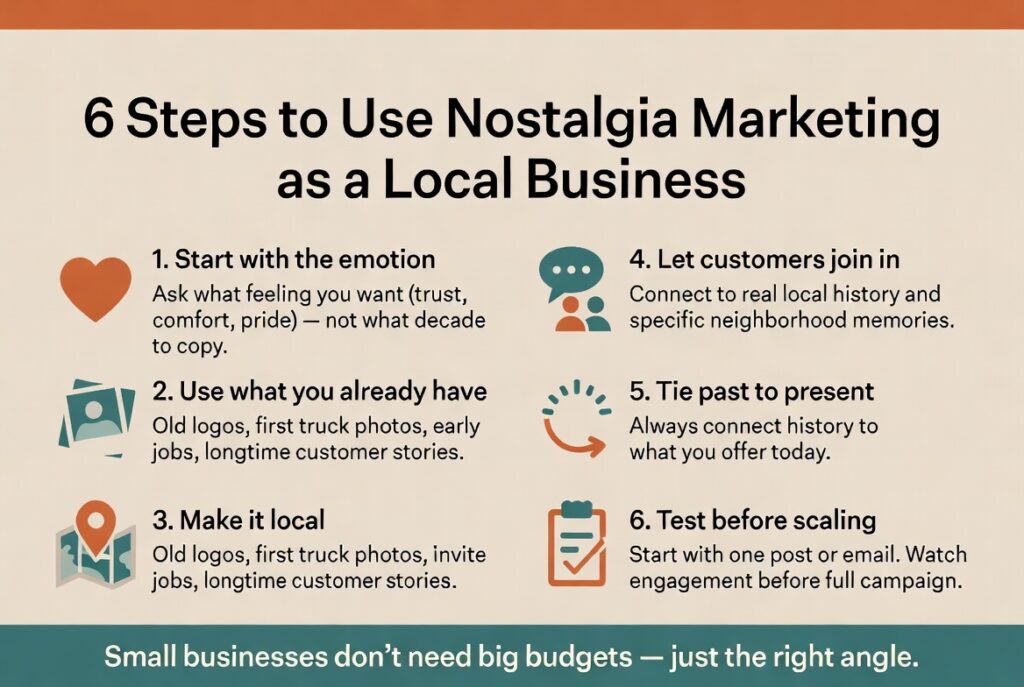
You do not need a national brand budget to use nostalgia well. You just need the right angle.
Step 1: Start with the emotion, not the decade
Don’t ask, “How do we make this look like the 90s?”
Ask, “What do we want people to feel?”
Usually, the best options are:
- Trust
- Comfort
- Pride in the community
- Family
- Reliability
Once you know the feeling, the creative gets easier.
Example for a fencing company: Instead of making a random retro graphic, share a story about building backyard fences where kids grew up playing for 20 years. That sells stability, not just style.
Step 2: Use what’s already in your business
You may have more nostalgia assets than you think.
Look for:
- Old logos
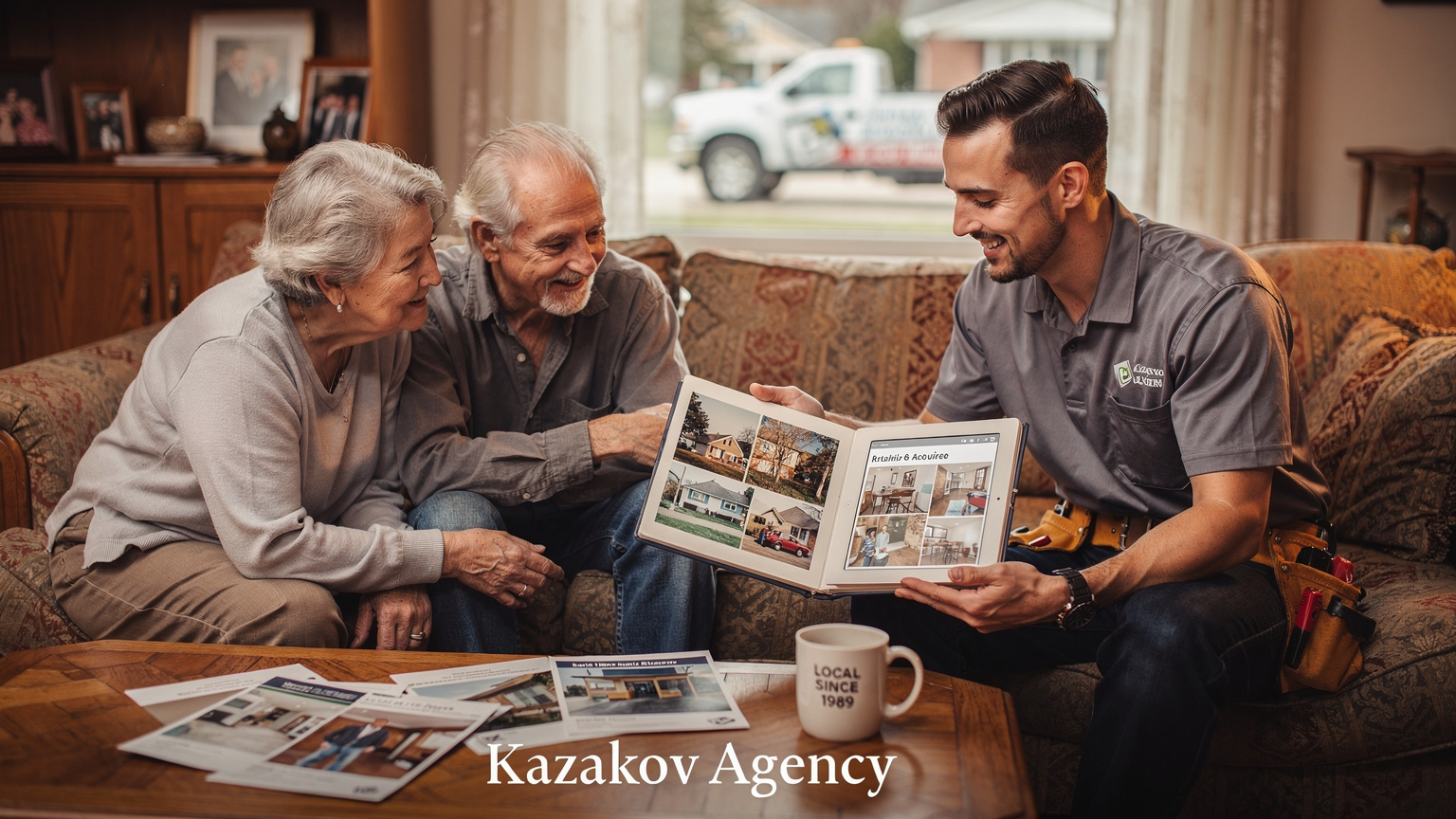
- Photos of your first truck, shop, or team
- Pictures of jobs from years ago
- Early invoices, uniforms, or signs
- Reviews from longtime customers
- Stories about how the company started
These are great for social posts, website content, anniversary campaigns, email newsletters, and local ads.
Step 3: Make it local
This is where small businesses can beat big brands.
Big companies go broad. You should go specific.
Strong local nostalgia sounds like this:
- “We’ve been fixing garage doors in Plano since before most homes in this neighborhood had Wi-Fi.”
- “Here’s what our first roofing crew looked like back in 2004.”
- “Remember the old Main Street storefront before the remodel? That was us.”
That works because it connects your company to real life in your town.
Step 4: Let customers join in
Nostalgia gets stronger when people participate.
Don’t just post your own memories. Invite customers to share theirs.
Simple ways to do that:
- Ask customers to comment with their first memory of your business
- Run a “throwback photo” post for your company anniversary
- Feature longtime customers in short video testimonials
- Share before-and-after stories from homes you’ve serviced for years
- Create a local memory post around a neighborhood landmark or event
This kind of content usually feels more authentic than straight promotional posts.
Step 5: Tie the past to the present
The goal is not just to look backward. The goal is to show that your history supports the service you provide today.
That means every nostalgia post should reinforce a current business point.
For example:
- Roofing contractor: “Still protecting local homes 15 years later.”
- Locksmith: “From old brass keys to smart lock installs, we’ve seen it all.”
- Auto body shop: “Three generations of drivers have trusted us after a collision.”
- Handyman: “We’ve helped homeowners maintain aging homes for decades.”
This is what makes nostalgia marketing useful instead of just decorative.
Step 6: Test before you push it hard
Before turning nostalgia into a full campaign, test it in smaller pieces.
Try:
- One Facebook throwback post
- A short email with an old company story
- A before-and-after timeline on your website
- A local anniversary offer tied to your history
Then watch the response.
If people comment, share, and engage, you know it connects. If they ignore it, your angle may be too broad or not meaningful enough.
What nostalgia marketing can look like for home service businesses
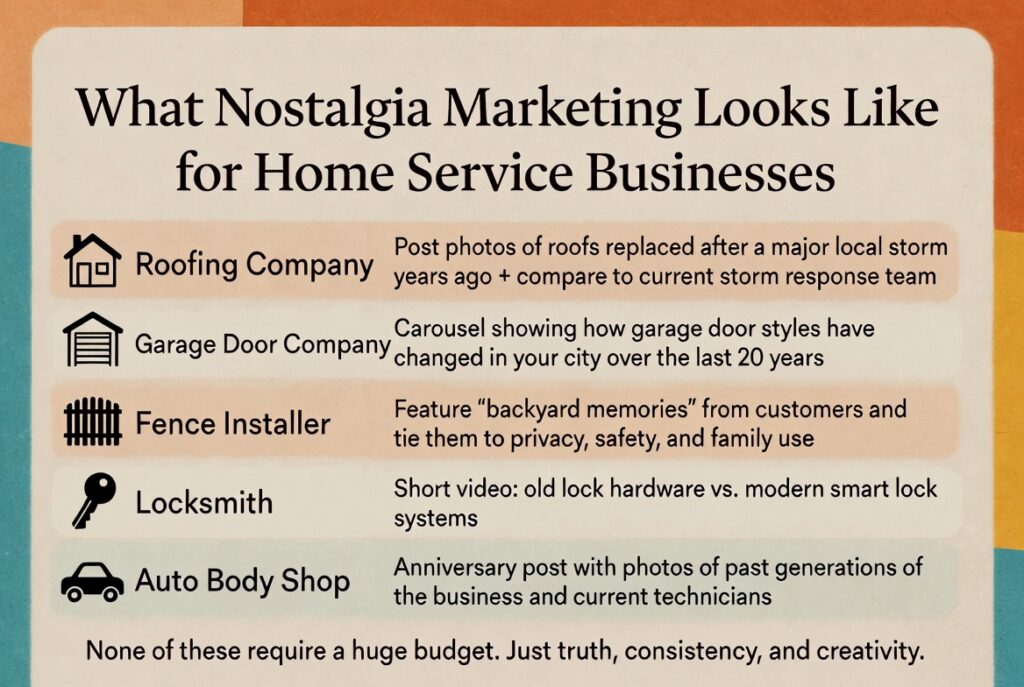
Here are a few practical examples you can use.
- Roofing company: Post photos of roofs you replaced after a major local storm years ago and compare them to your current storm response team.
- Garage door company: Share a carousel of how garage door styles have changed in your city over the last 20 years.
- Fence installer: Feature “backyard memories” from customers and tie them to privacy, safety, and family use.
- Locksmith: Create a short video showing old lock hardware versus modern smart lock systems.
- Auto body shop: Celebrate your anniversary with photos of past generations of the business and current technicians.
None of these require a huge budget. They just require truth, consistency, and a little creativity.
The bottom line
Nostalgia marketing works because it makes your business feel familiar, trustworthy, and human.
For local companies, that’s a big advantage. You don’t need a famous brand history. You just need real ties to your customers and community.
If you use nostalgia, keep it simple:
- Make it relevant
- Make it local
- Make it honest
- Connect it to the service you provide today
The past can help people trust you in the present. And trust is what turns attention into calls, estimates, and booked jobs.
If you want help building marketing that feels real and brings in better local leads, Kazakov Agency can help.
📌 Related Resources & Services
Main Service: Explore our comprehensive Content Marketing Services.
Recommended Articles:
Next Step: Learn how we deliver measurable growth — Social Media Marketing Services.