How Much Do Google Ads and Local Service Ads Cost for Home Service Businesses?
If you run a roofing company, garage door business, fence installation crew, locksmith service, or another local trade, you’ve probably asked the same question: how much should Google Ads or local service ads actually cost?
The honest answer is simple: it depends on your market, your service, and how well the campaign is managed.
But that doesn’t mean you have to guess.
Below is a practical breakdown of what Google Ads usually costs, how that compares with local service ads, what drives those costs up or down, and how to set a budget that makes sense for a local service business in the U.S.
Typical Google Ads Cost Benchmarks
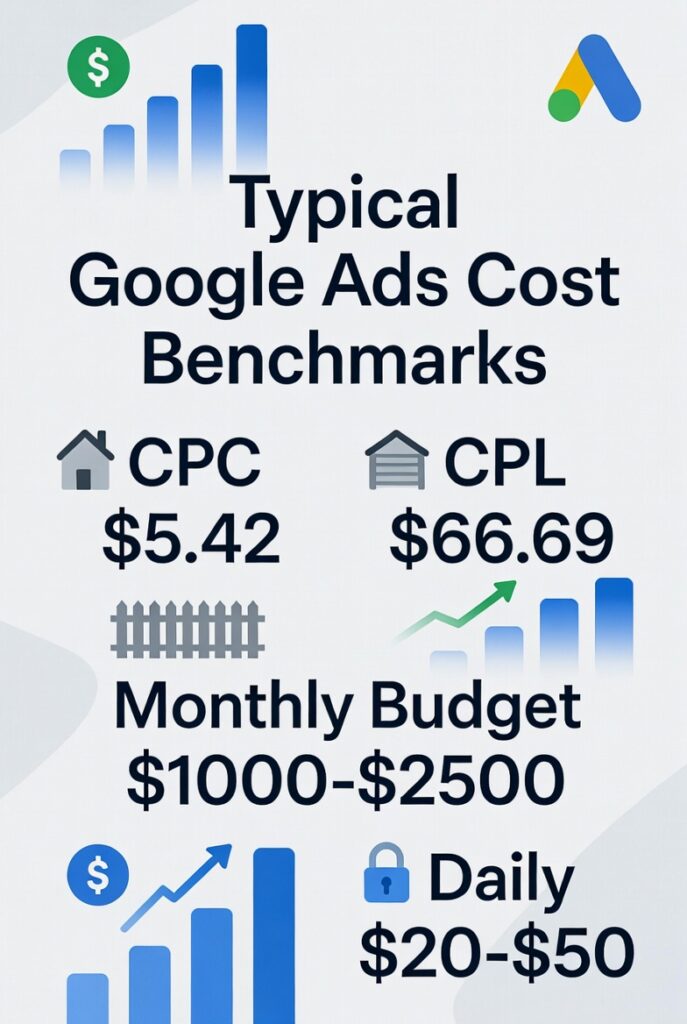
Here are a few useful numbers to keep in mind:
- Average cost per click (CPC): $5.42 on Google Search
- Average cost per lead (CPL): $66.69
- Typical starter budget for small businesses: $1,000–$2,500 per month
- Many new campaigns start around: $20–$50 per day
Those are general benchmarks across industries. In home services, costs are often higher than average because the searches are high-intent and competitive.
For example, someone searching roof repair near me or garage door company open now is much closer to hiring than someone searching general information. That makes those clicks more valuable—and usually more expensive.
Google Ads vs. Local Service Ads: What’s the Cost Difference?
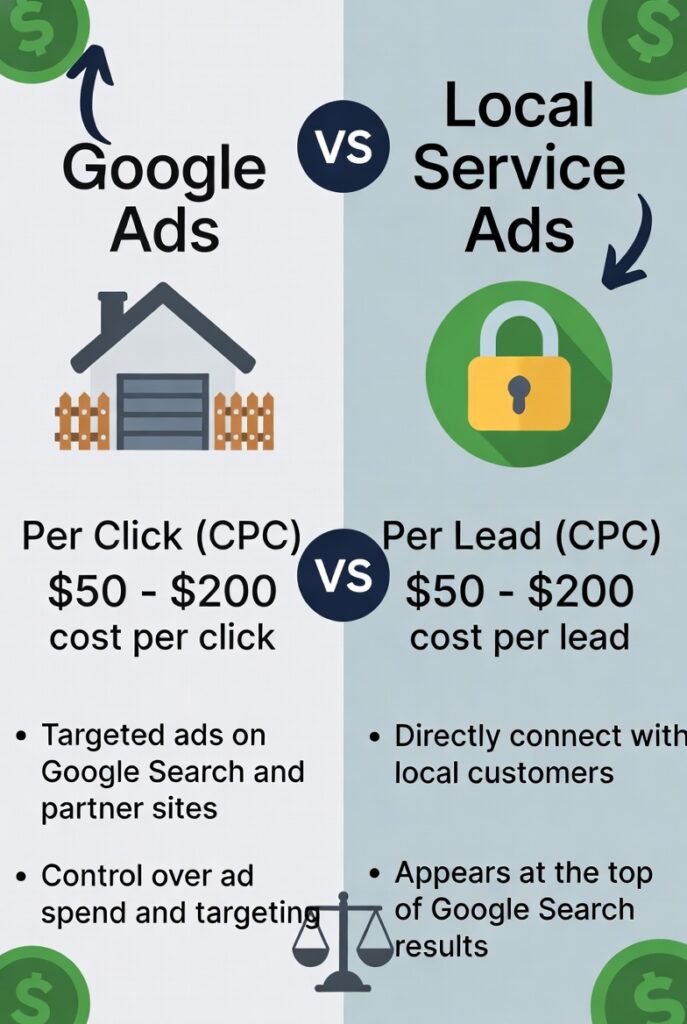
For many contractors, comparing Google Search campaigns with local service ads is an important part of budgeting.
The biggest difference is that Google Ads usually charges per click, while Local Service Ads typically charge per lead. That can make local service ads feel simpler for businesses that want phone calls and booked jobs rather than website traffic.
Still, the actual cost depends on your category, market, responsiveness, and competition. In some service areas, Google Ads may offer more control. In others, local service ads may produce faster lead flow for the same budget.
What Does a Click Cost in Google Ads?
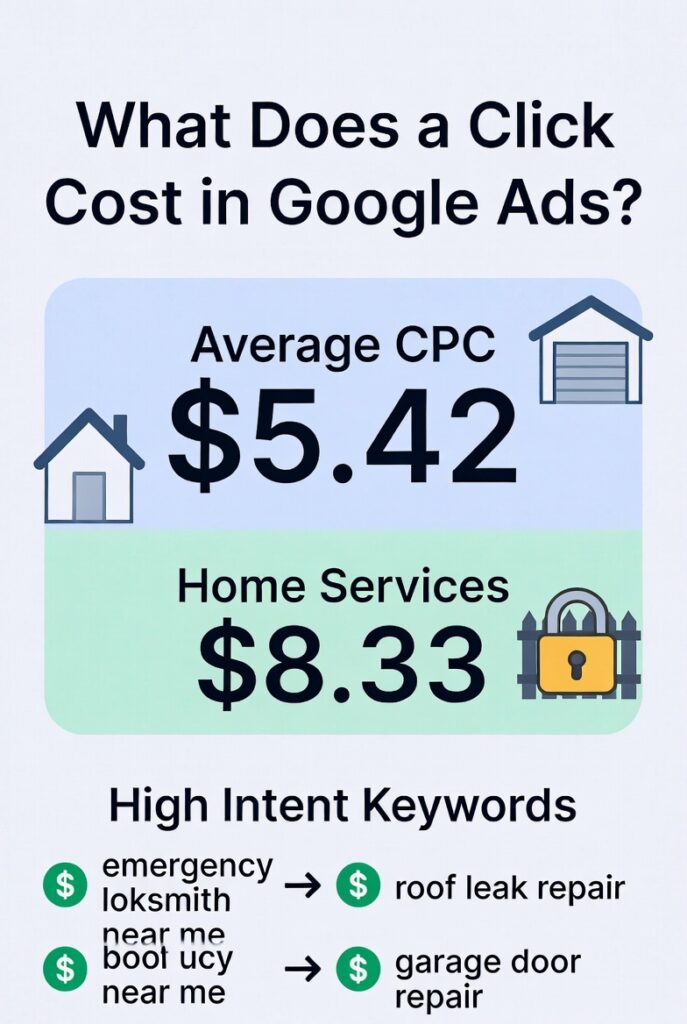
Google Ads usually charges you per click, not per impression.
That means you pay when someone actually clicks your ad.
Across all industries, the average Google Search click is about $5.42. On the Display Network, clicks are often under $1, but for most local contractors, search campaigns are where the real leads come from.
For home service companies, CPCs are often above average
One benchmark from recent industry data shows:
- Home & Home Improvement: $8.33 average CPC
- Personal Services: $7.17 average CPC
- Automotive Repair, Service & Parts: $4.35 average CPC
If you’re in a competitive metro area, some high-intent keywords can cost much more than that.
Examples:
- emergency locksmith near me
- roof leak repair [city]
- garage door repair [city]
- fence company near me
Why Keywords Change the Price So Much
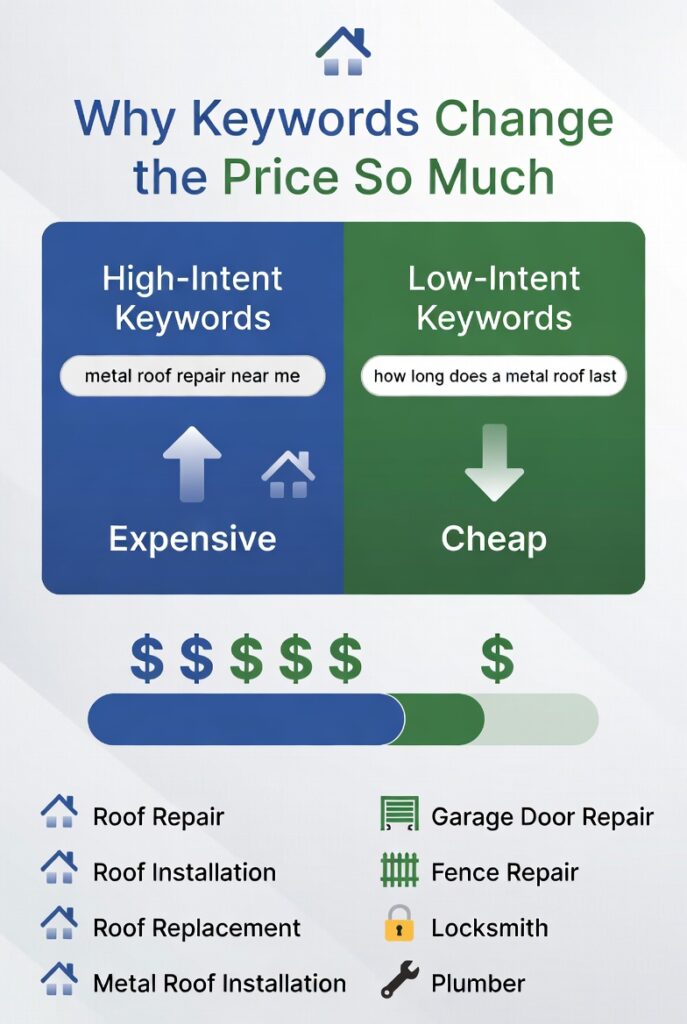
Not all clicks cost the same.
Google Ads pricing is heavily influenced by keyword intent and competition.
A few examples:
- High-intent keyword: metal roof repair near me
- Lower-intent keyword: how long does a metal roof last
The first search is from someone looking to hire. The second may just be research.
That’s why service-based keywords usually cost more.
Long-tail keywords can save money
Long-tail keywords are more specific searches. They often have lower competition and better lead quality.
Examples:
- same day garage door spring repair in Dallas
- wood privacy fence installer in Nashville
- 24 hour car locksmith in Tampa
These searches may get less traffic, but they often convert better because the customer already knows what they need.
For local service businesses, this is where a lot of profitable Google Ads campaigns are built.
What Does a Lead Cost?
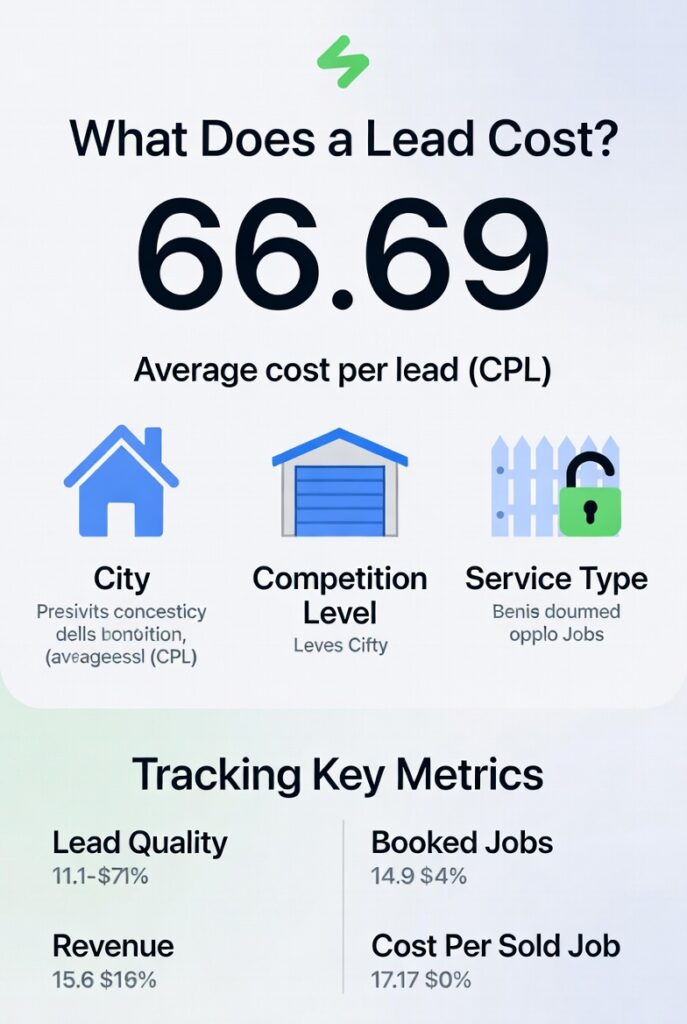
The average Google Ads cost per lead across industries is around $66.69.
But for local trades, the real number can swing a lot depending on:
- Your city
- Your competition
- Your service type
- Your landing page
- Your booking process
A roofing lead in a major city may cost far more than a handyman lead in a smaller suburban market.
And just as important: not every lead has the same value.
If a $90 lead turns into a $9,000 roof replacement, that’s fine.
If a $40 lead turns into a low-margin service call that wastes your crew’s time, that’s not fine.
That’s why smart advertisers track:
- Lead quality
- Booked jobs
- Revenue from ads
- Cost per sold job
How Much Should a Small Business Spend on Google Ads?
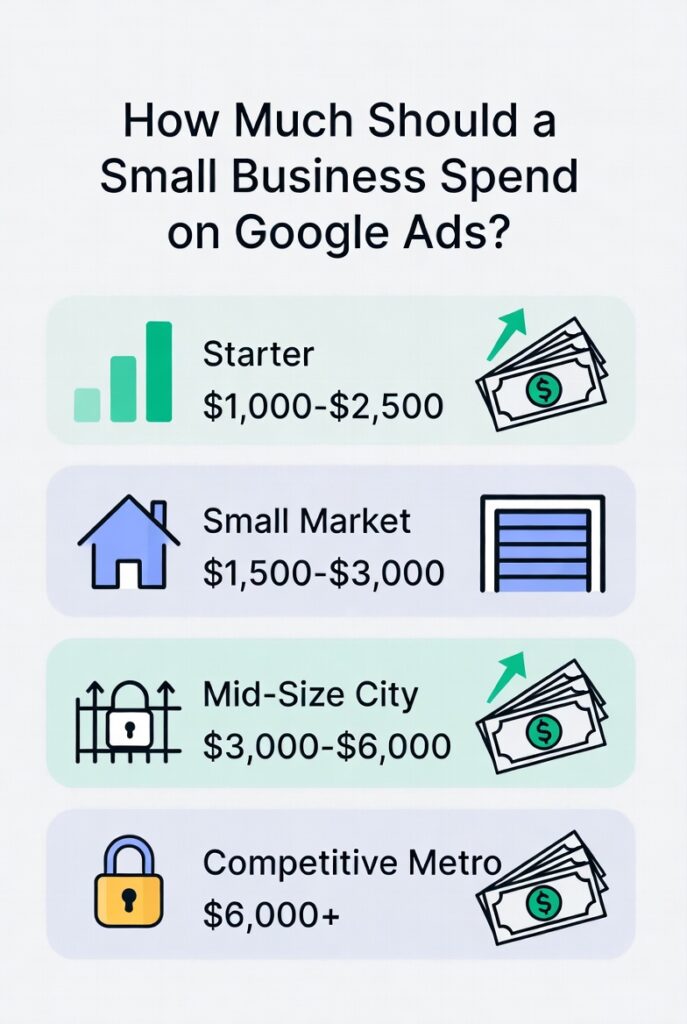
A lot of small businesses start in the $1,000 to $2,500 per month range.
That’s enough to test demand, gather data, and see which services and keywords produce real calls and form leads.
For many home service companies, a realistic starting point looks like this:
- Small local market: $1,500–$3,000/month
- Mid-size city: $3,000–$6,000/month
- Highly competitive metro: $6,000+/month
This doesn’t mean bigger is always better.
A poorly built $10,000 campaign can lose money fast.
A tightly managed $2,500 campaign focused on high-intent searches can produce excellent ROI.
Businesses that qualify for local service ads may also want to test a split budget between LSAs and standard search campaigns to see which channel produces better booked-job economics.
What Actually Impacts Google Ads Cost?
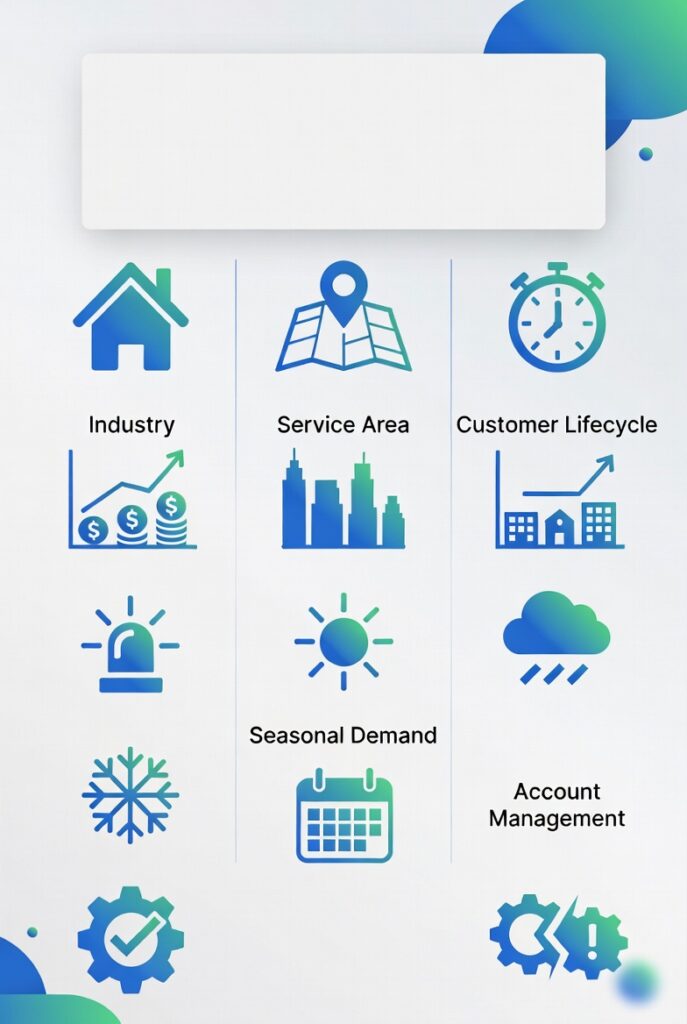
Here are the biggest factors.
1. Your industry
Home services are competitive because one booked job can be worth hundreds or thousands of dollars.
That means advertisers are willing to bid aggressively.
2. Your service area
Clicks in Los Angeles, Miami, Dallas, or Phoenix usually cost more than clicks in smaller towns.
More competitors = more bidding pressure.
3. Your customer lifecycle
Some services are urgent, like locksmith or garage door repair. Others take more time, like fencing, roofing replacement, or large remodel work.
Longer sales cycles often require more follow-up and better lead nurturing.
4. Seasonal demand
Storm season, winter freezes, summer home improvement surges, and local weather events can shift costs fast.
In home services, Google Ads costs are never static.
5. How well the account is managed
This is the big one.
Bad management drives costs up fast.
Common problems include:
- Broad keywords that attract junk traffic
- No negative keyword list
- Sending paid traffic to a weak homepage
- Running ads outside service areas
- No call tracking
- No follow-up system for missed calls and form leads
How Google Decides What You Pay
Google Ads is an auction, but the highest bidder does not automatically win.
Google also looks at Quality Score and Ad Rank.
In plain English, Google wants to show ads that are relevant and useful.
That means your cost is influenced by:
- Your bid
- Your ad relevance
- Your expected click-through rate
- Your landing page experience
If your ad and landing page match the search well, you can often pay less than a sloppy competitor and still outrank them.
That’s why strong campaign structure matters.
How Budgets Work in Google Ads
This part confuses a lot of business owners.
When you set a daily budget, Google may spend more or less on a given day. It tries to average out over the month.
For example:
- If your daily budget is $50, Google can spend more than that on a busy day.
- But over the month, it should stay within your monthly limit.
A quick formula:
- Monthly budget ÷ 30.4 = average daily budget
So if you want to spend about $3,000/month:
- $3,000 ÷ 30.4 = about $99/day
Important terms to know
- Budget: what you want to spend
- Bid: the max you’re willing to pay for a click
- Cost: what you actually pay for that click
- Spend: what Google uses from your budget over time
Ways to Control Google Ads Costs
If you want better results without wasting money, focus on these basics:
1. Tight location targeting
Only run ads where you actually provide service.
If your fence company serves a 20-mile radius, don’t pay for clicks from the other side of the state.
2. Ad scheduling
Run ads when leads are most likely to turn into booked jobs.
If nobody answers the phone at night, don’t pay for late-night calls unless you offer true emergency service.
3. Device targeting
For many local service businesses, mobile leads are the highest value because people search when they need help now.
4. Negative keywords
This is one of the fastest ways to cut waste.
Examples of terms many contractors should block:
- free
- DIY
- jobs
- training
- salary
- wholesale
5. Better landing pages
A clean page with one service, one area, one offer, and one clear call to action usually performs better than sending traffic to a general homepage.
Other Costs to Keep in Mind
Your ad spend is not the only cost.
You may also need to budget for:
- Landing page design
- Call tracking
- CRM or lead management tools
- Agency management
- Ongoing optimization
There’s also the cost of wasted spend if the account is not managed properly.
That includes:
- Bad clicks
- Irrelevant searches
- Unqualified leads
- Missed calls that were paid for but never answered
Bottom Line: Is Google Ads Worth It?
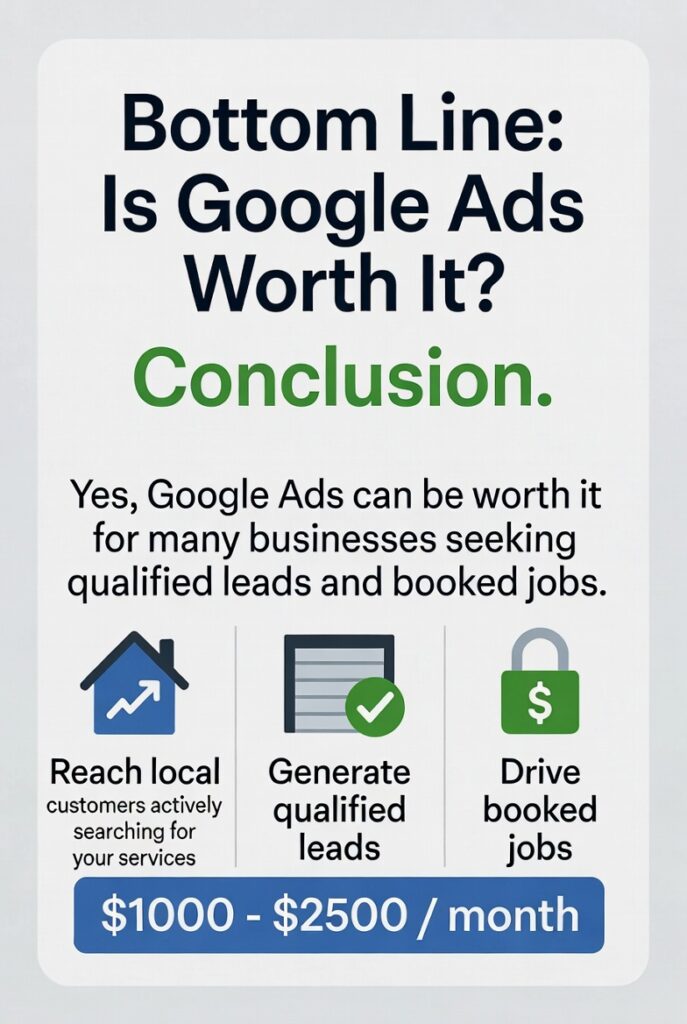
For home service businesses, Google Ads can work extremely well.
Why? Because it puts you in front of people who are already searching for help.
But the platform is only profitable when the setup is tight and the traffic is turned into real appointments.
As a starting point, most local service companies should expect to test with at least $1,000 to $2,500 per month, and more in competitive markets.
The real goal is not getting the cheapest clicks.
It’s getting qualified leads that turn into profitable jobs.
If you also qualify for local service ads, testing both channels together can give you a clearer picture of true lead cost and return on ad spend.
If you want to know what budget makes sense for your market, service area, and job values, Kazakov Agency can help you build a Google Ads plan that’s focused on booked work—not vanity metrics.
📌 Related Resources & Services
Main Service: Explore our comprehensive PPC Campaign Management.
Recommended Articles:
Next Step: Learn how we deliver measurable growth — Cost Per Lead Analysis for Local Businesses.