Cost Per Lead for Local Service Business: How Much Online Advertising Costs in 2026
Online ads are getting more expensive. That part is true. But they’re also getting smarter.
For home service companies, understanding the cost per lead for local service business campaigns matters more than obsessing over raw ad spend. The real question is not just “How much do ads cost?” It’s “How much should I pay to get a booked job at a profit?”
If you run a roofing company, garage door business, fencing company, locksmith shop, handyman service, or auto body shop, this guide will help you set realistic expectations. We’ll break down average ad costs, explain what those numbers actually mean, and show you how to keep your cost per lead under control.
Online advertising costs at a glance
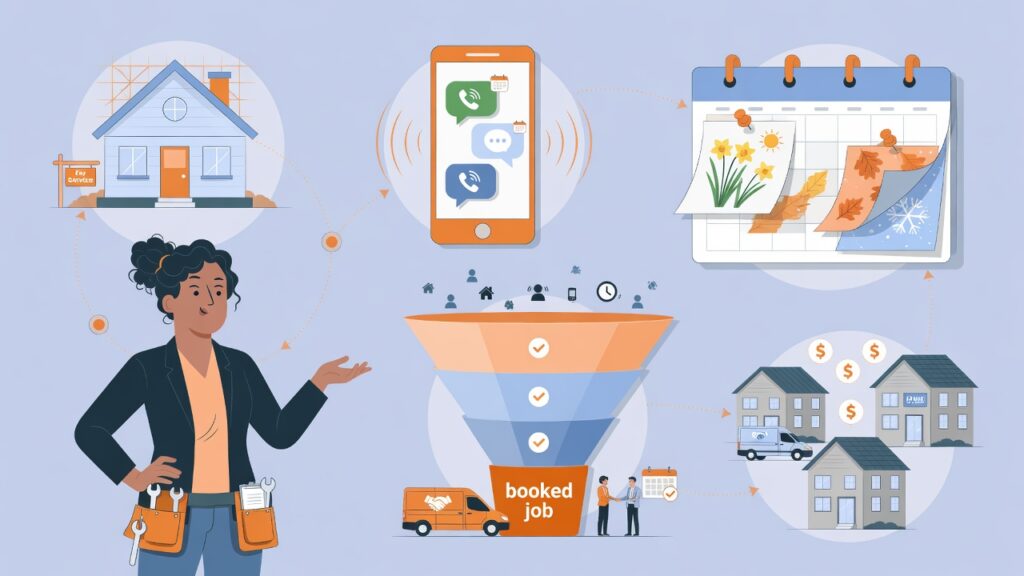
Here are common benchmark ranges across major ad platforms:
- Average monthly Google Ads spend: $3,000+
- Google Ads CPC: $5.42
- Google Ads CPL: $66.69
- Facebook Ads CPC: $0.70
- Facebook Ads CPL: $27.66
- Instagram Ads CPC: $0.40–$2
- TikTok Ads CPV: $0.01–$0.07
- LinkedIn Ads CPC: $4.50–$12
- YouTube Ads CPM: $4–$10
- Google Display Network CPM: $3–$10
Those are averages, not promises.
In local service industries, your actual cost depends on:
- Your service type
- Your city and competition
- Your ad quality
- Your landing page
- How well your calls and forms are handled
A roofing lead in Dallas will not cost the same as a handyman lead in a smaller town. That’s normal.
Cost per lead for local service business: what really affects it?
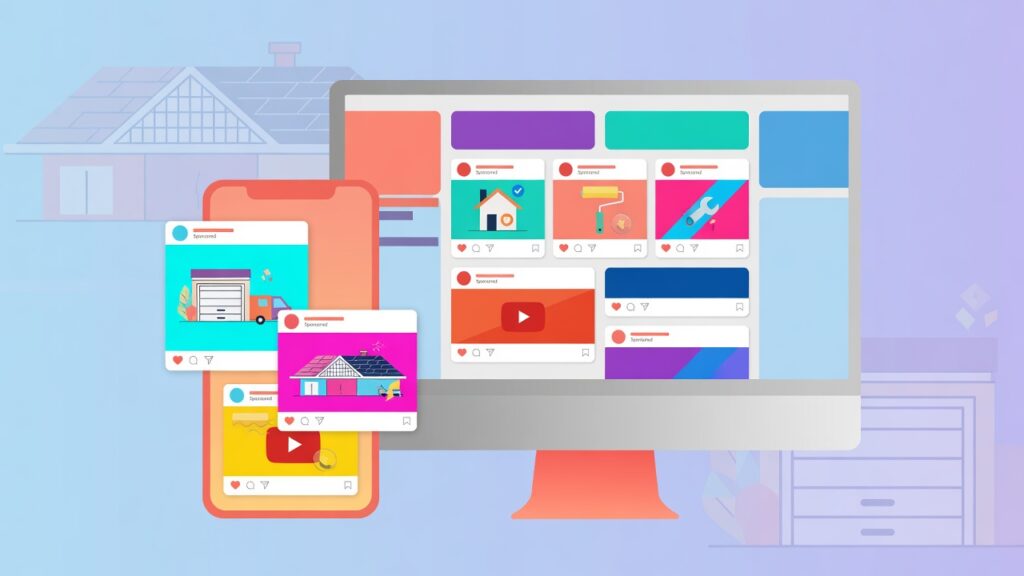
For most owners, the cost per lead for local service business marketing is the metric that tells you whether your campaigns are sustainable. A lower CPL is great, but only if those leads turn into real estimates, booked jobs, and revenue.
Your true numbers are influenced by:
- Your average job value
- Your lead-to-close rate
- Your speed to answer calls and forms
- Your service area competition
- Your seasonality and urgency
That’s why two companies in the same industry can have very different results even on the same platform.
How much do Google Ads cost?
For most local service businesses, Google Ads is still the strongest lead channel because it captures high-intent demand.
If somebody searches:
- “garage door repair near me”
- “emergency locksmith”
- “roof leak repair”
that person usually needs help now. That’s why Google clicks cost more than social clicks. The traffic is closer to buying.
Average Google Ads costs:
- CPC: $5.42
- CPL: $66.69
- Typical monthly budget: $3,000+
What CPC means
CPC means cost per click. You pay when someone clicks your ad.
That number is set through Google’s ad auction. In simple terms, Google looks at:
- Your bid
- Your ad relevance
- Your landing page quality
- Your expected click-through rate
So the highest bidder does not always win.
That matters for contractors. A better ad and a tighter landing page can lower your cost without lowering your lead volume.
What CPL means
CPL means cost per lead. This is the number most owners should care about.
A lead could be:
- A phone call
- A form submission
- A booked estimate
- A message requesting service
If you’re paying $70 per lead but closing one out of every four leads into a $2,500 job, that can work very well.
If you’re paying $25 per lead and most of them are junk, that’s a problem.
Cheap leads are not always good leads.
How much do social media ads cost?
Social media ads are usually cheaper per click than Google Ads. But they also target people differently.
Google reaches people who are already searching.
Social media reaches people based on interests, behavior, or demographics.
That means social ads are often better for:
- Brand awareness
- Promotions
- Seasonal offers
- Retargeting past visitors
- Generating lower-cost top-of-funnel leads
Facebook ad costs
Facebook is still one of the most useful ad platforms for local service businesses, especially for lead generation and remarketing.
Average Facebook costs:
- CPC: $0.70
- CPL: $27.66
Facebook Lead Ads can work well for offers like:
- Free estimates
- Spring roof inspections
- Garage door tune-up specials
- Fence installation consultations
But lead quality depends heavily on follow-up speed. If your office calls back two days later, performance drops fast.
Instagram ad costs
Instagram uses the same ad system as Facebook, so setup is similar.
Average Instagram costs:
- CPC: $0.40–$2
- CPE: $0.03–$0.08
- CPM: $2–$6
Instagram works best when the service is visual. Good examples:
- Fence before-and-after projects
- Roof replacements
- Auto body repair transformations
- Garage door upgrades
If your photos and videos are weak, Instagram will be harder to make profitable.
TikTok ad costs
TikTok is cheaper than many business owners expect, but it’s not a fit for every local service company.
Average TikTok costs:
- CPC: $0.30–$1.50
- CPV: $0.01–$0.07
- CPM: $4–$10
TikTok can work if you have strong short-form video content and want to build local visibility. For direct-response service leads, it usually works better as a support channel than as the main channel.
LinkedIn ad costs
LinkedIn is mostly for B2B. For most home service companies, it’s not the first place to spend ad dollars.
Average LinkedIn costs:
- CPC: $5–$10
- CPM: $25–$45
- CPL: $45–$120
This platform makes more sense if you want commercial contracts, property managers, builders, or business partnerships.
YouTube ad costs
YouTube can be strong for local awareness and remarketing.
Average YouTube costs:
- CPM: $4–$10
- CPC: $0.50–$3
- CPV: $0.10–$0.30
For example, a roofer can run short videos before storm season. A garage door company can retarget past website visitors with testimonials or service offers.
YouTube is usually not the first channel we’d recommend for a small local business with a limited budget, but it can work well once search campaigns are already profitable.
How much do display ads cost?

Display ads are banner-style ads shown across websites and apps.
Typical Google Display Network costs:
- CPM: $3–$10
- CPC: $0.50–$1
Display traffic is usually colder than search traffic. People are not actively looking for a contractor when they see the ad.
That’s why display works best for:
- Remarketing
- Brand awareness
- Staying visible after a website visit
For most home service companies, remarketing display ads make more sense than broad display campaigns.
7 ways to control your online ad costs
You do not control the market, but you do control efficiency.
Here’s how to keep costs in line.
1. Make your ads highly relevant
Your ad should match the search, the service, and the landing page.
Bad example:
“Best Home Services in Texas”
Better example:
“24/7 Garage Door Repair in Houston – Same-Day Service”
The more specific the message, the better the click quality.
2. Use negative keywords
This is one of the easiest ways to stop wasting money in Google Ads.
If you don’t want searches like these, block them:
- free
- DIY
- jobs
- salary
- training
- parts only
A locksmith should not pay for “locksmith school.”
A roofer should not pay for “roofing jobs near me.”
3. Watch your bidding strategy
Automated bidding can work well, but only if conversion tracking is set up correctly.
If Google is optimizing around bad data, it will spend confidently and badly.
Make sure you know:
- What counts as a conversion
- Which leads are real
- Which campaign is producing booked jobs
4. Tighten your targeting
For local businesses, broad targeting wastes money.
Focus on:
- Your real service area
- Your most profitable ZIP codes
- Your best service types
- Your business hours, if response time matters
If you only serve a 20-mile radius, don’t pay for clicks from two counties away.
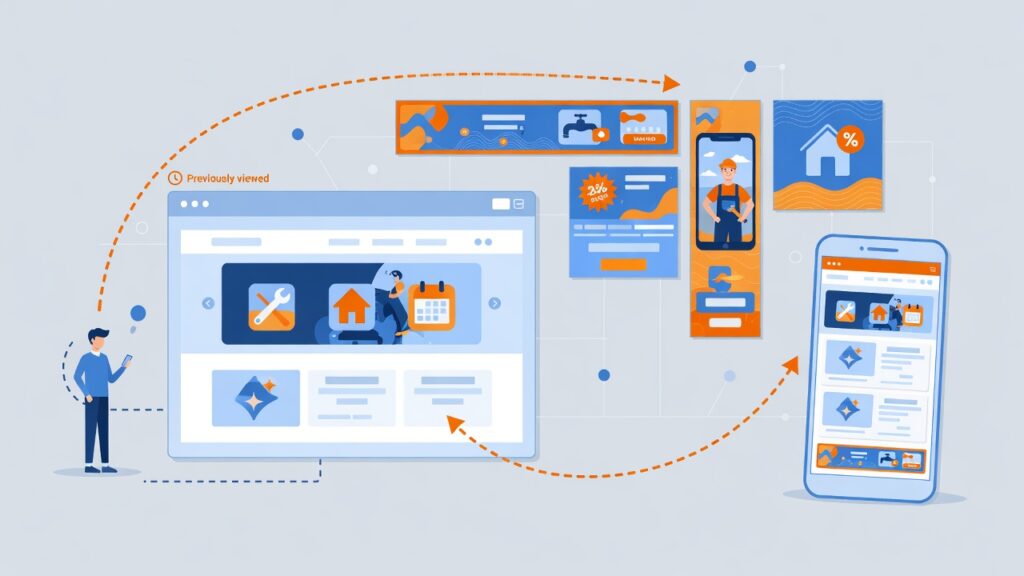
5. Use remarketing
Most people will not convert on the first visit.
Remarketing helps you stay in front of people who already:
- Visited your website
- Clicked an ad
- Viewed a service page
- Started a form but didn’t finish
This is one of the best ways to get more value from traffic you already paid for.
6. Send traffic to real landing pages
Do not send every ad click to your homepage.
If someone clicks an ad for “emergency roof repair,” the page should be about emergency roof repair.
A strong landing page should have:
- A clear headline
- A specific offer
- A simple form
- A click-to-call button
- Reviews or trust signals
- Service area details
Better pages usually mean lower cost per lead for local service business campaigns and better close rates overall.
7. Improve your ad copy
Small copy changes can make a real difference.
Use words and details that reduce hesitation:
- Free estimate
- Same-day service
- Licensed and insured
- Local company
- Financing available
- 20+ years of experience
Specific beats generic almost every time.
Online advertising cost FAQs
What affects online ad costs?
The biggest factors are:
- Your industry
- Your location
- Your competition
- Your targeting
- Your ad quality
- Your landing page conversion rate
- Your seasonality
Storm season, winter emergencies, and peak summer service demand can all change pricing.
What do CPC, CPM, CPL, CPA, and CPV mean?
- CPC: cost per click
- CPM: cost per 1,000 impressions
- CPL: cost per lead
- CPA: cost per acquisition
- CPV: cost per video view
For most local service companies, CPL and booked job cost matter more than vanity metrics.
How much should a local service business spend on Google Ads?
A practical starting range is usually $1,000 to $2,500 per month at minimum, though competitive markets often require more.
If you’re in roofing, legal-adjacent emergency service, or a large metro, you may need a higher budget to gather enough data and produce steady lead flow.
The bottom line
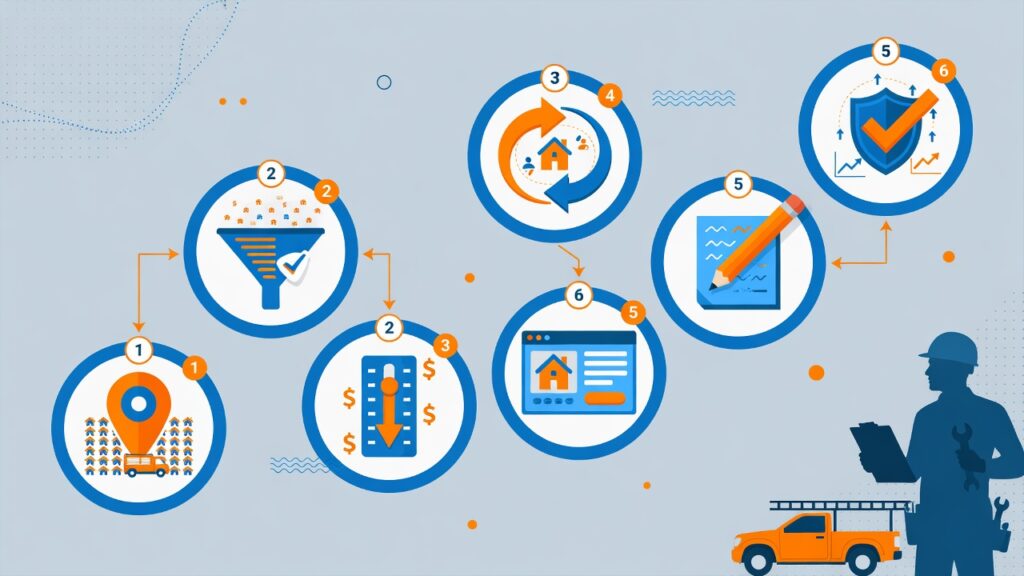
Online ad costs are rising, but that doesn’t mean ads stop working. It means sloppy campaigns get exposed faster.
For local service businesses, the goal is simple: pay a reasonable amount for qualified leads and turn those leads into profitable jobs.
If your campaigns are built right, tracked correctly, and tied to strong landing pages, paid traffic can still be one of the fastest ways to grow.
If you want help getting better leads from Google Ads, Local Service Ads, or paid social, Kazakov Agency can help you build campaigns that are designed for real service businesses, not vanity metrics.
📌 Related Resources & Services
Main Service: Explore our comprehensive GA4 / GTM & Analytics Tracking.
Recommended Articles:
Next Step: Learn how we deliver measurable growth — View All Marketing Case Studies.