
13 Local SEO Services for Small Business Tips That Still Bring Leads in 2026
Local SEO is harder than it used to be, and that is especially true for owners looking for effective local SEO services for small business growth.
Google is showing more AI Overviews, more AI-powered local packs, and more Local Services Ads. That means fewer spots for roofing companies, garage door installers, fence contractors, locksmiths, handymen, and other local service businesses to show up for free.
But here’s what matters: local SEO still drives calls, form fills, and booked jobs.
Even with lower visibility in some Google surfaces, business actions have not dropped at the same rate as impressions. In plain English: fewer people may see your listing, but the ones who do are still ready to act.
If you run a home service business, local SEO is still worth doing. You just have to focus on what actually moves rankings and leads now. That is why smart local SEO services for small business owners should stay focused on the fundamentals that still work.
What Local SEO Looks Like in 2026
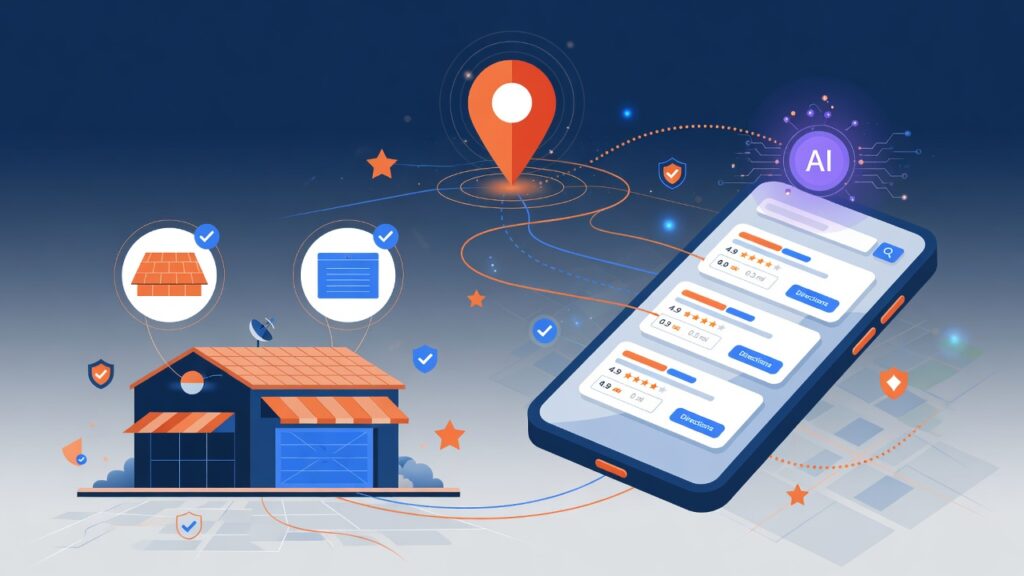
Search has changed, but the core signals have not.
Google, Maps, Bing, and AI tools still rely on the same basics:
- Relevance — do you clearly offer the service people are searching for?
- Trust — do you have strong reviews, accurate business info, and a real reputation?
- Authority — do other websites and directories mention and link to your business?
- Activity — does your profile look current, active, and used by real customers?
If you get those right, you can still compete.
13 Local SEO Services for Small Business Tips That Still Work
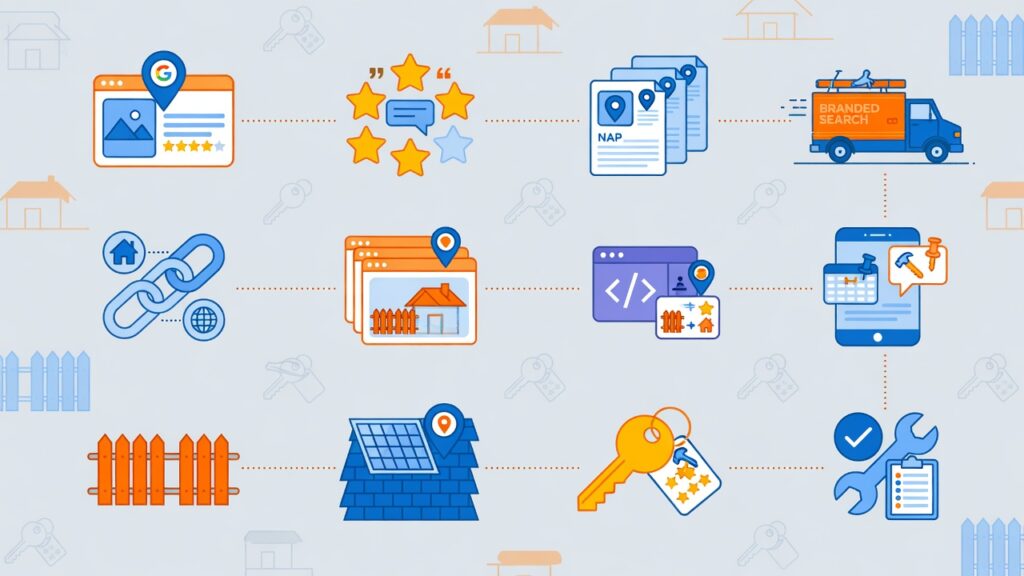
1. Nail the basics first
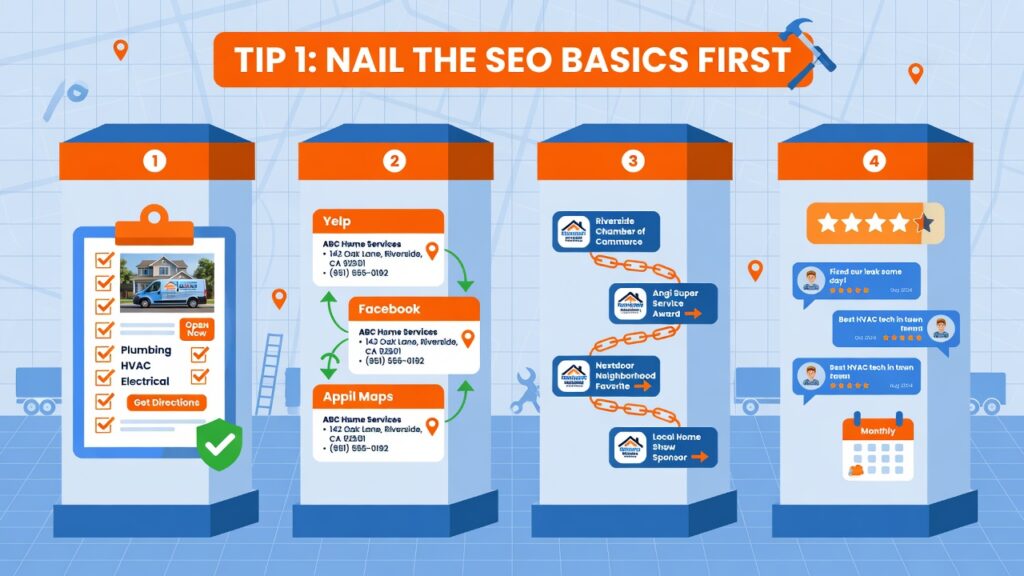
Most contractors don’t need fancy SEO tactics first. They need the fundamentals done right.
Focus on these four jobs:
- Complete your Google Business Profile fully.
- Keep your business name, address, phone, and website consistent across directories.
- Build quality links to your website, especially local ones.
- Get reviews consistently every month.
If these four are weak, the rest won’t matter much.
2. Create a review system, not random review requests
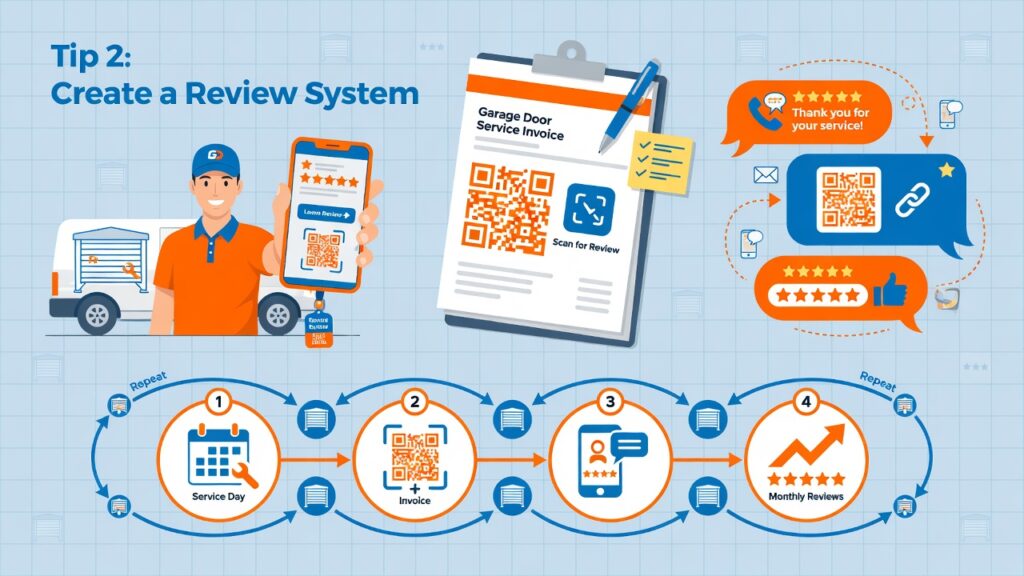
Reviews are one of the biggest local ranking factors, especially in competitive markets.
Don’t leave it up to chance. Build a repeatable process.
A simple system:
- Ask at the end of every completed job.
- Text the review link before the crew leaves.
- Use a QR code on invoices, yard signs, or business cards.
- Train techs and office staff to ask the same way every time.
Example: a garage door company that gets 8 to 10 new Google reviews every month will usually outrank a similar competitor that gets 2 or 3, even if both have been in business for years.
3. Guide review language the right way

The words inside reviews matter.
A review that says, “Great company” is nice. A review that says, “They replaced our roof in Tampa after storm damage and handled the insurance process fast” is much better.
Why? Because it reinforces:
- your service
- your location
- your quality
You should never script fake reviews. But you can make it easier for customers by suggesting what is helpful.
For example, ask them to mention:
- what service you did
- what city or neighborhood they’re in
- what stood out about the experience
4. Respond to every review
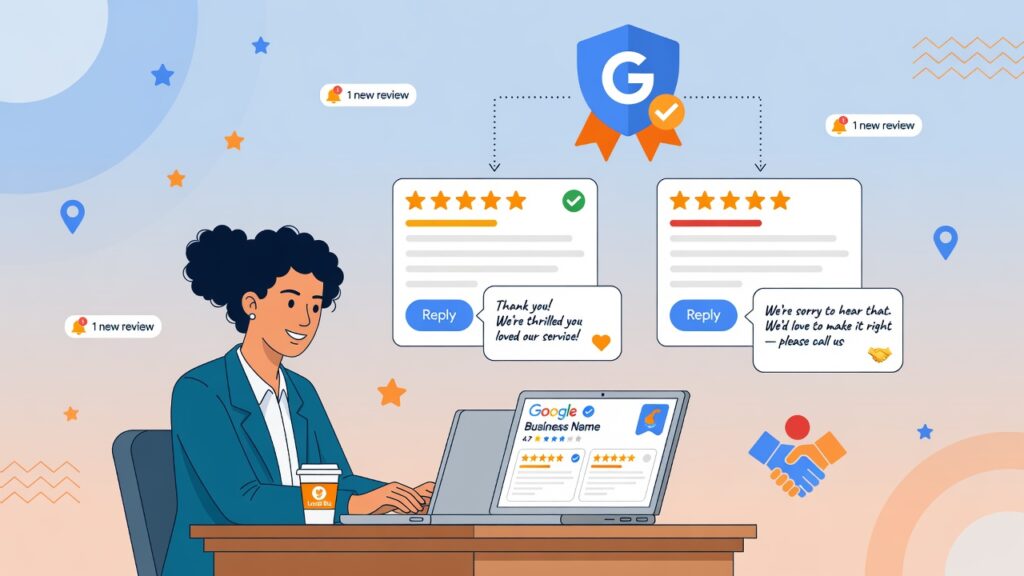
Good review response habits help in two ways:
- They show Google your profile is active.
- They show future customers you care.
Respond to positive and negative reviews.
Keep it simple. Thank the customer, mention the service if relevant, and stay professional.
Example: “Thanks for trusting us with your fence installation in Frisco. We appreciate the feedback and the opportunity to help.”
5. Choose the right primary Google Business Profile category
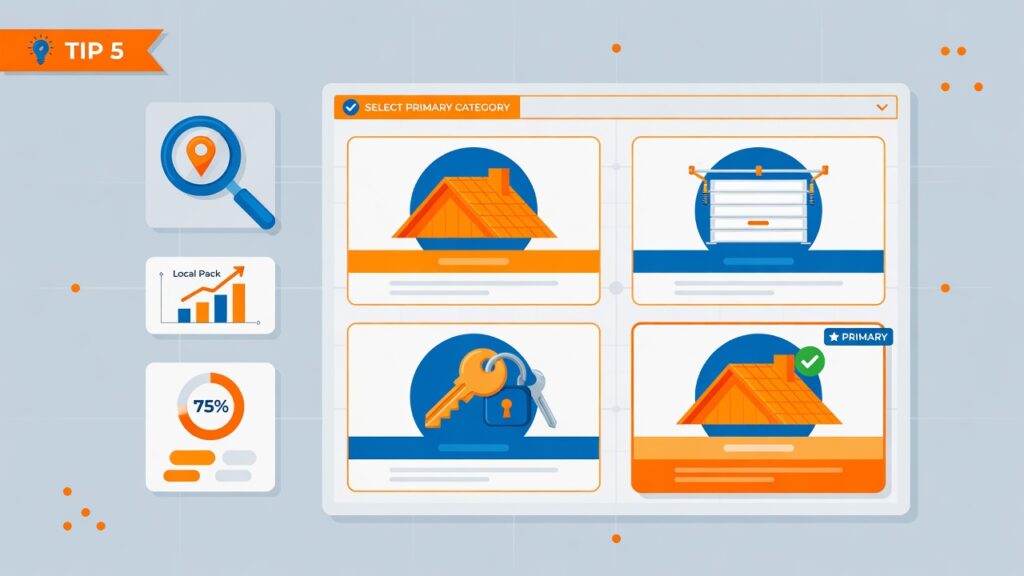
This is a big one.
Your primary category should match your main money-making service, not every service you offer.
Examples:
- If most of your revenue comes from roof replacement, use Roofing contractor.
- If you mostly install garage doors, use Garage door supplier or the closest accurate option.
- If you’re a locksmith, don’t use a broad category if a tighter one fits better.
Then add secondary categories for the other services you really provide.
Wrong category choices can lower rankings and bring in bad leads.
6. Set your business hours accurately
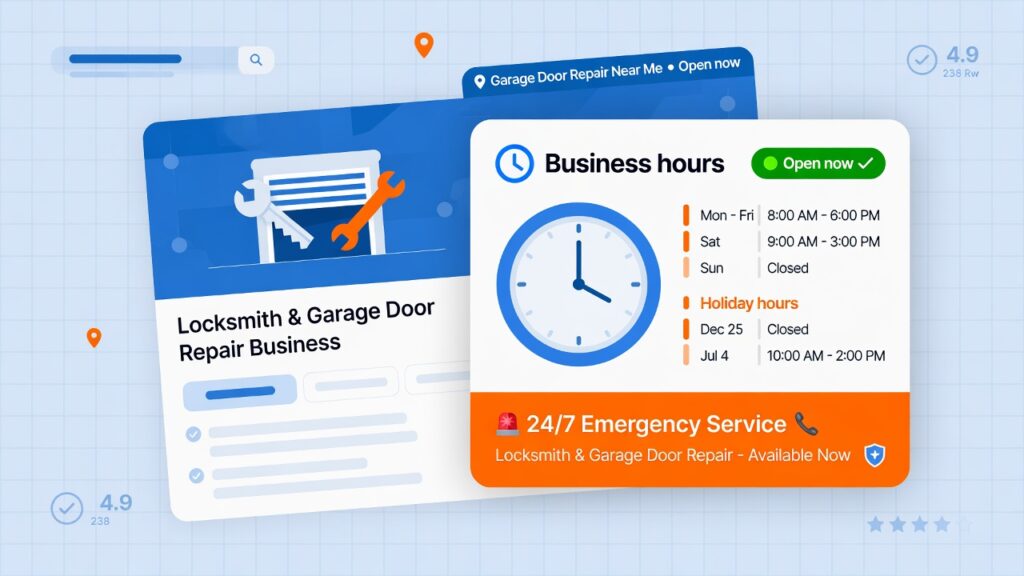
Google wants to show businesses that are open and available.
Make sure these are always correct:
- regular hours
- holiday hours
- special hours
- emergency or after-hours availability
If your office closes at 5 but you answer calls until 9, your listing should reflect when customers can actually reach you.
That matters a lot for emergency services like locksmiths, garage door repair, and storm damage roofing.
7. Keep your profile active
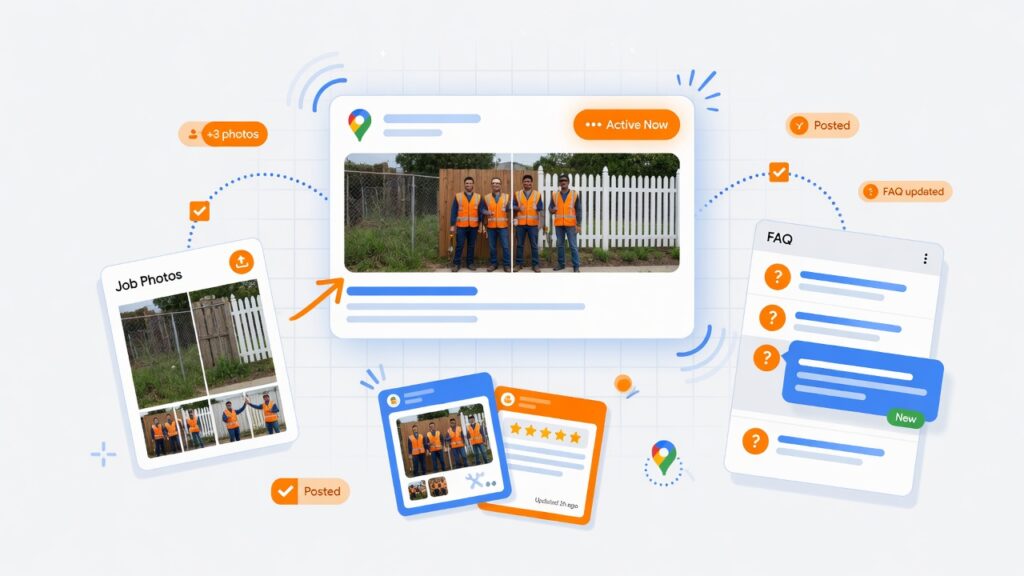
An outdated profile looks abandoned.
Update your Google Business Profile regularly with:
- new job photos
- team photos
- short posts
- frequently asked questions
- service updates
For home service companies, before-and-after photos work especially well.
A fencing contractor can post cedar privacy fence installs. A roofer can post storm restoration jobs. A handyman can post bathroom repair photos.
Fresh activity helps both rankings and conversion.
8. Don’t rely on Google alone

Customers now search in more places than before.
That includes:
- Bing Places
- Apple Maps
- Yelp
- AI tools that pull business data from third-party sources
If your info is wrong outside Google, you lose visibility.
At minimum, claim and update your major profiles. Make sure your name, phone number, website, service area, and hours are consistent everywhere. Strong local SEO services for small business visibility depends on consistency across every platform customers use.
9. Increase branded searches
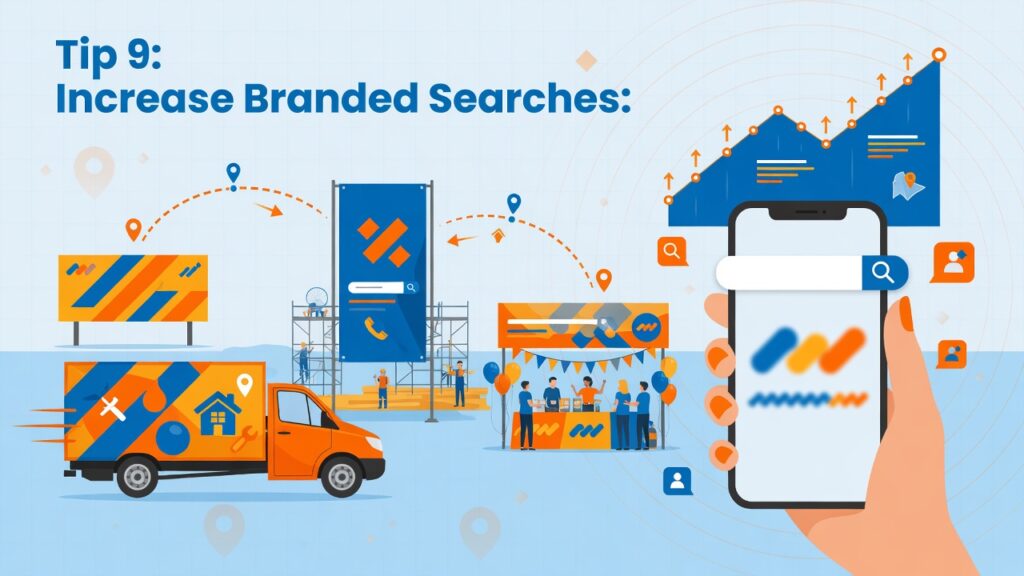
Branded search means people look up your company by name.
That sends a strong trust signal.
For local contractors, branded search often grows from offline marketing, not just SEO.
Good ways to build it:
- truck wraps
- yard signs
- jobsite signs
- local sponsorships
- community events
- door hangers
- direct mail
When more people search your business name after seeing it in the real world, that can support your local visibility online too.
10. Build local links
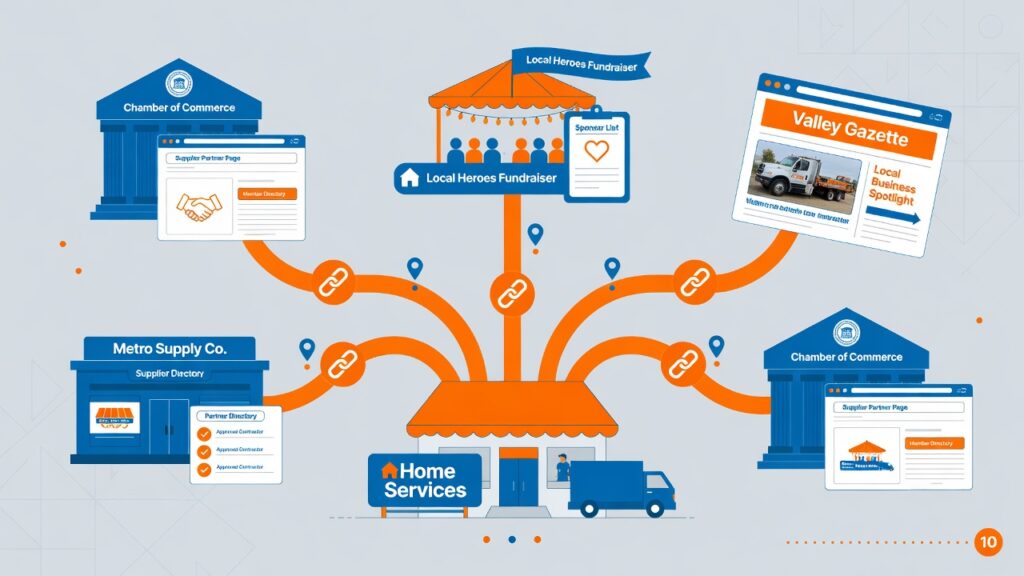
Local links still matter.
A link from a local chamber of commerce, neighborhood association, supplier, community event site, or local news site is often more valuable than a random weak backlink.
Good link opportunities for home service businesses:
- supplier or partner pages
- local charities and sponsorships
- builder associations
- community event websites
- local newspaper features
- “best local businesses” lists
If you already work with plumbers, realtors, property managers, or restoration companies, look for partnership link opportunities there too.
11. Build real location pages
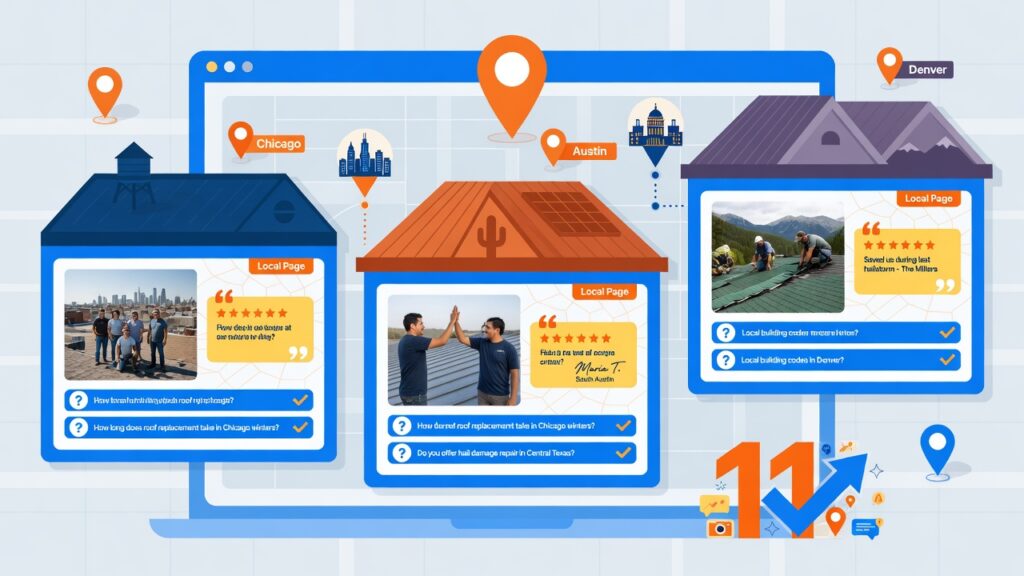
If you serve multiple cities, you need dedicated location pages.
But don’t make thin pages that just swap city names.
A strong location page should include:
- the service you offer in that city
- real job examples from that area
- photos
- customer testimonials
- local FAQs
- service details
- financing or pricing info if relevant
Example: a roofing page for Plano should not be the same as your McKinney page with only the city name changed. Each page should feel useful to someone in that market.
12. Use LocalBusiness schema on your website
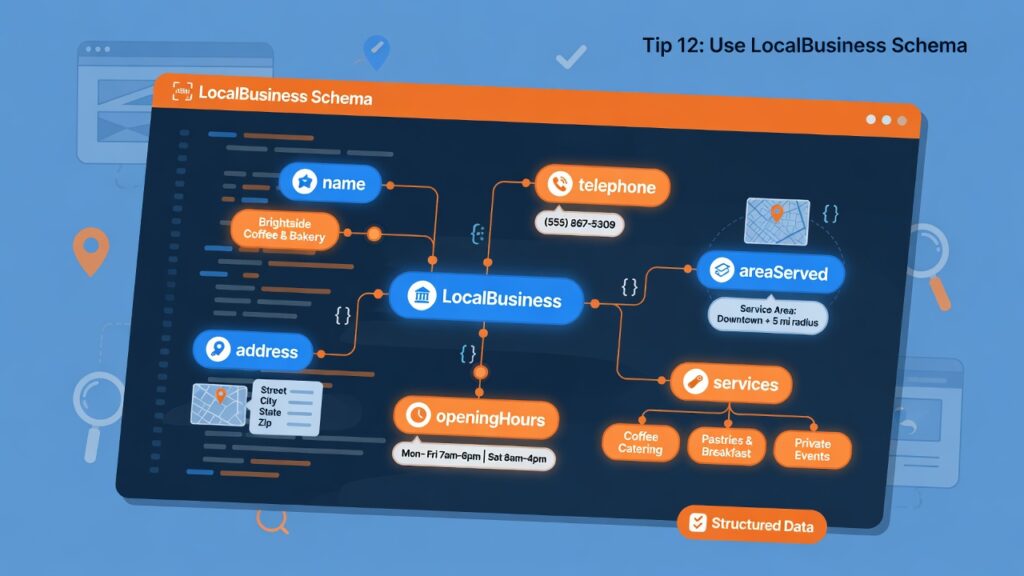
Schema is structured data that helps search engines understand your business details.
It won’t magically rank you by itself, but it helps support the rest of your local SEO.
Make sure your site clearly marks up things like:
- business name
- phone number
- address
- hours
- service area
- services offered
This is one of those technical items that should be set up correctly once and checked during site audits.
13. Encourage real engagement on Google Maps
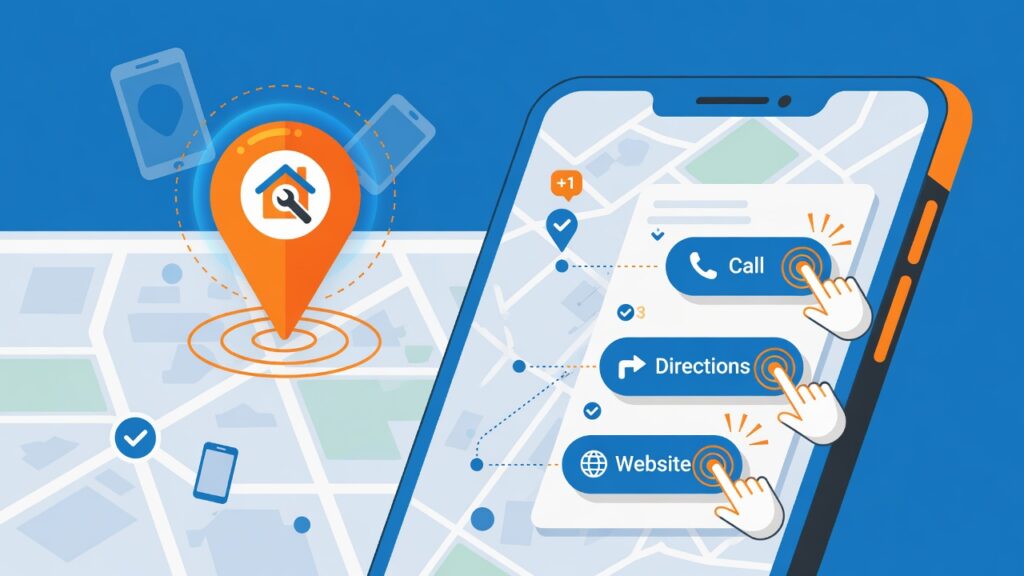
Google pays attention to user behavior.
That includes things like:
- calls
- clicks
- direction requests
- website visits
You should never fake engagement. But you should make it easy for real customers to use your listing.
That means:
- keeping your address or service area accurate
- using strong photos
- posting often
- collecting recent reviews
- making sure your listing matches what people need right now
The easier it is for customers to interact with your profile, the better.
Quick Answers to Common Local SEO Questions

How long does local SEO take?
Usually 3 to 6 months for meaningful movement. Some Google Business Profile changes can help faster, especially in weaker markets.
Do citations still matter?
Yes. They still help validate your business information and support trust.
Is local SEO worth it for small service businesses?
Yes. For most local contractors, it remains one of the best long-term lead channels because it targets people already looking for the service. In fact, many business owners start researching local SEO services for small business after seeing how well local search converts.
What matters most right now?
If you want the short answer:
- fully optimized Google Business Profile
- steady review growth
- consistent citations
- local links
- strong city/service pages
Final Takeaway
AI is taking up more space in search results. That’s real. Organic visibility is tighter than it used to be.
But local SEO is not dead. Not even close.
For home service businesses in the U.S., the companies winning local search in 2026 are usually not doing secret tricks. They’re doing the basics better than everyone else, and they’re doing them consistently.
If you tighten up your profile, reviews, citations, local pages, and links, you can still bring in strong local leads month after month.
If you want help building a local SEO system that actually produces calls and booked jobs, Kazakov Agency can help.
📌 Related Resources & Services
Main Service: Explore our comprehensive Local SEO Services.
Recommended Articles:
Next Step: Learn how we deliver measurable growth — Digital Marketing in Boston, MA.