Local SEO Services for Small Business: How AI Search Changed Who You Compete Against
AI search changed the rules for local marketing, and it’s forcing business owners to rethink how they approach local SEO services for small business growth.
A few years ago, your competition was easy to spot. If you owned a roofing company, you watched other roofers. If you ran a garage door business, you tracked other garage door companies in your area.
Now AI tools don’t just list businesses by category. They build answers around the customer’s problem. That means your company may be compared with DIY videos, cheap products, apps, big-box store solutions, and service alternatives you never thought of as competitors.
If you want your business to show up in AI results, you need to stop thinking only in service categories and start thinking in outcomes.
How AI Search Is Changing Local SEO Services for Small Business
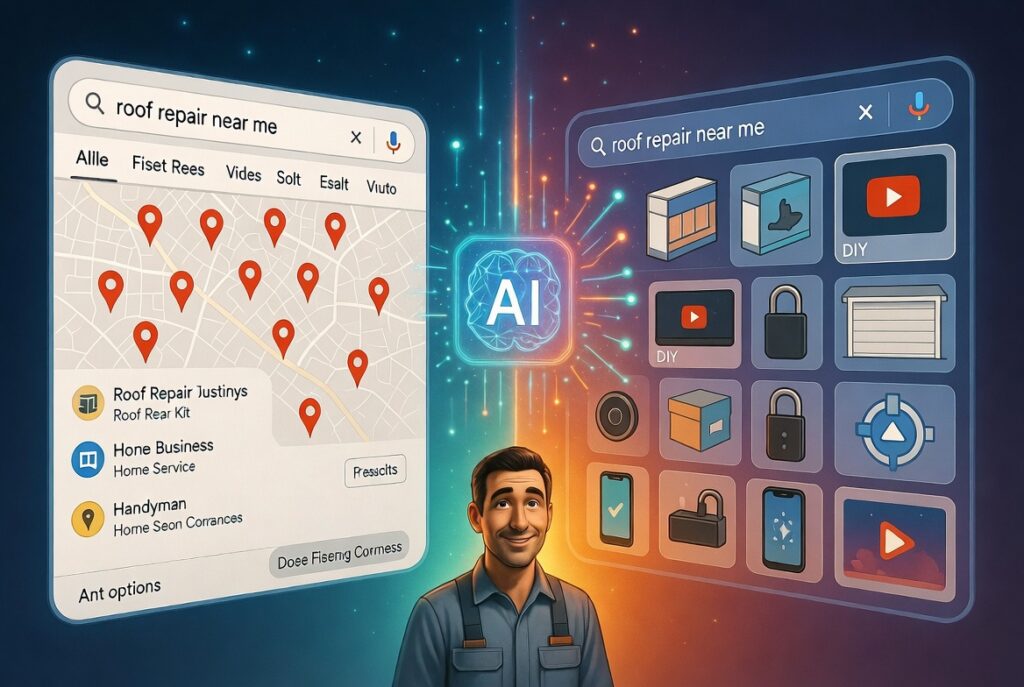
Traditional search usually kept comparisons inside the same lane.
If someone searched for “roof repair near me,” they mostly saw local roofing companies. If they searched for “garage door repair,” they mostly saw repair companies.
AI search works differently. It looks at the problem first.
So instead of only showing service providers, AI may include:
– DIY fixes
– Retail products
– Mobile apps
– YouTube tutorials
– Preventive tools
– Adjacent services
For a home service business, that changes everything.
A few examples:
– A roofing contractor is no longer just competing with roofers. They may also compete with roof coatings, patch kits, handyman videos, and insurance claim advice pages.
– A garage door company may compete with lubricant products, spring adjustment tutorials, or smart opener upgrades.
– A locksmith may compete with smart locks, rekey kits, and DIY troubleshooting guides.
– A fencing company may compete with repair kits, prefab panels from Home Depot, or handyman services.
From the customer’s perspective, all of these are possible answers to the same problem.
That’s the key point: AI compares solutions, not just businesses in the same category.
Why Small Businesses Are Losing Visibility in AI Results
Most local business websites were built for old-school search.
They usually include:
– Service pages
– City pages
– Reviews
– Before-and-after photos
– Basic FAQs
That still helps with local SEO. But it often falls short in AI search.
Why? Because AI needs more than a list of services. It needs clear reasoning.
If your website only says:
– “We offer roof repair in Dallas”
– “We install wood fences in Tampa”
– “We provide garage door spring replacement in Phoenix”
that tells AI what you do, but not when your solution is the best choice.
AI is more likely to pull content that explains:
– what causes the problem
– when a DIY fix works
– when it fails
– what risks come with the wrong choice
– when hiring a pro saves time, money, or safety issues
Here’s a simple example.
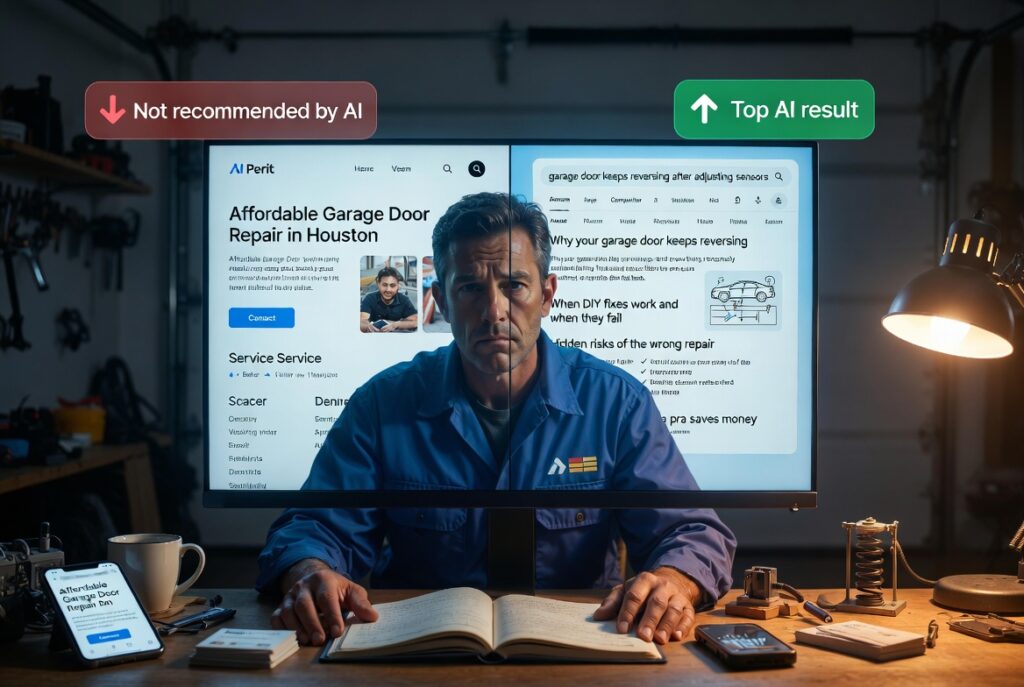
These two page ideas are not equal:
– “Affordable garage door repair in Houston”
– “Why your garage door keeps reversing after you adjusted the sensors”
The first is a standard service page. The second matches how real customers think and how AI answers questions.
That’s why some good local companies are getting skipped. It’s not always about budget or backlinks. Sometimes their site just doesn’t give AI enough useful information to work with.
For many brands investing in local SEO services for small business marketing, this is the missing piece: content has to explain decisions, not just describe services.
The Real Problem: You’re Competing With Substitute Solutions
Your biggest competition may not be another contractor.
It may be a substitute.
A substitute solution solves the same problem in a different way.
For local service businesses, common substitutes include:
– DIY repair guides
– store-bought products
– apps and automated tools
– cheaper temporary fixes
– general handymen instead of specialists
– “wait and see” advice
For example:
Roofing company:
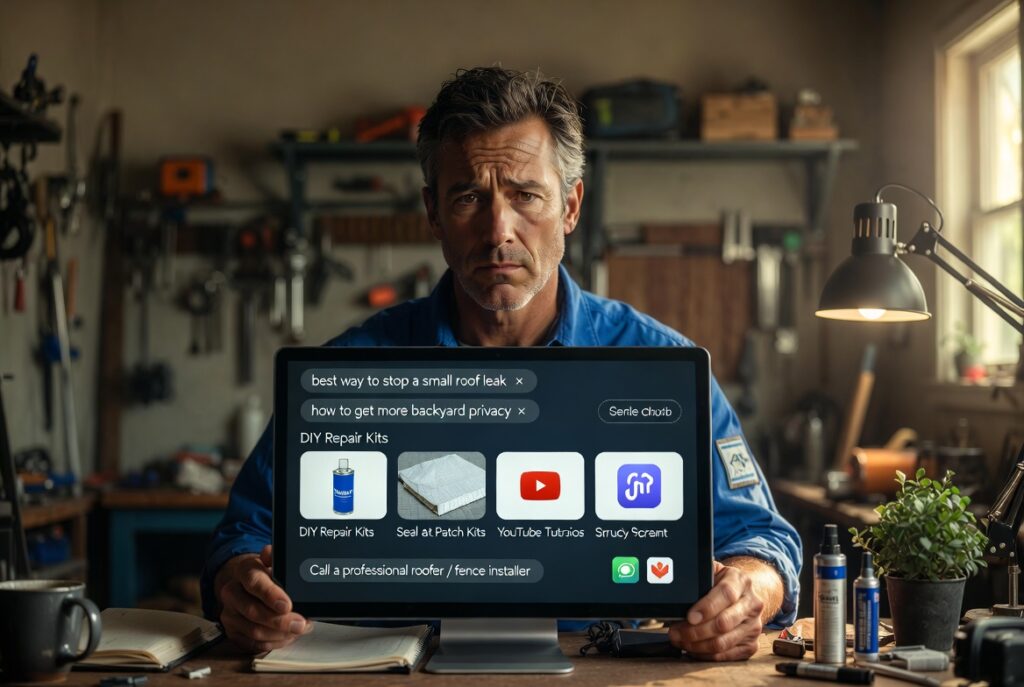
A homeowner asks AI, “What’s the best way to stop a small roof leak?”
The answer may include sealant, tarp options, patch kits, attic inspection tips, and only then mention calling a roofer.
Fence installer:
Someone asks, “How can I get more backyard privacy?”
AI may recommend privacy screens, shrubs, lattice panels, or temporary barriers before suggesting a fence contractor.
Auto body shop:
A driver asks, “How do I fix a scratched bumper?”
AI may surface touch-up paint pens, polish compounds, DIY videos, and mobile repair options.
You may not like those alternatives, but pretending they don’t exist won’t help.
How to Position Your Business Against AI-Expanded Competition
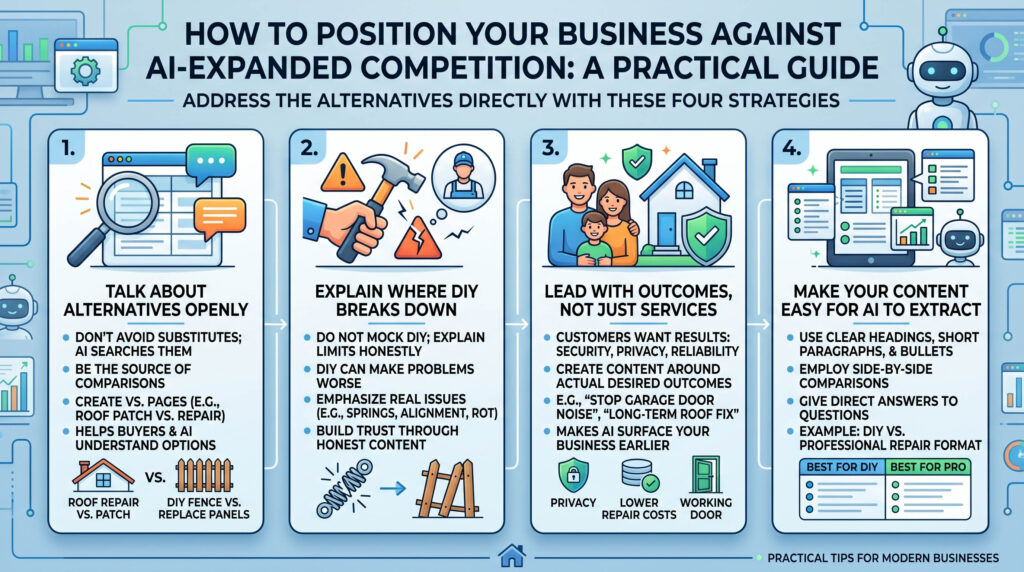
The fix is straightforward: address the alternatives directly.
Here are four practical ways to do it.
1. Talk about alternatives openly
A lot of business owners avoid mentioning substitutes because they think that helps the competition.
Usually, the opposite is true.
If your site stays silent, AI will pull comparison points from somebody else.
Create pages like:
– Roof patch vs. full roof repair: when each makes sense
– DIY fence repair vs. replacing damaged panels
– Can a smart garage opener fix slow door problems?
– Rekey kit vs. hiring a locksmith: what’s safer?
This kind of content helps both buyers and AI systems.Проверь тексты и комментарии, то что дал Gemini. Совпадают ли они с твоими?
2. Explain where DIY breaks down
DIY content is popular because it sounds cheaper and faster.
Sometimes it works. Sometimes it makes the real problem worse.
Your job is not to mock DIY. Your job is to explain its limits clearly.
For example:
– A roof patch may stop water briefly, but not fix damaged flashing or underlayment.
– A new garage door opener won’t solve worn rollers, bad springs, or track alignment issues.
– A fence repair may fail if posts are rotted below grade.
– A smart lock won’t fix a door that’s misaligned in the frame.
That kind of content builds trust because it sounds honest, not salesy.Проверь тексты и комментарии, то что дал Gemini. Совпадают ли они с твоими?
3. Lead with outcomes, not just services
Customers don’t wake up wanting “spring replacement” or “sectional fence installation.”
They want:
– a secure home
– lower repair costs
– more privacy
– a door that works every morning
– a roof that won’t leak again
– a car that looks normal after an accident
So yes, keep your service pages. But also create content around the actual outcomes people want.
Examples:
– How to stop a garage door from waking up the whole house
– Best long-term fix for recurring roof leaks around a chimney
– How to improve backyard privacy without wasting money on temporary fixes
– When small dent repair is enough and when you need full body work
That gives AI a better reason to surface your business earlier in the decision process.Проверь тексты и комментарии, то что дал Gemini. Совпадают ли они с твоими?
Make your content easy for AI to extract
AI favors content that is well structured and easy to summarize.
Use:
– clear headings
– short paragraphs
– bullet points
– side-by-side comparisons
– direct answers to specific questions
Good example structure:
DIY Garage Door Fix vs. Professional Repair
– Best for DIY: cleaning sensors, replacing remote batteries, checking basic obstructions
– Best for a pro: spring problems, cable issues, track damage, door imbalance
– Risk of DIY: injury, wrong diagnosis, more expensive repairs later
– Best choice if safety matters: professional inspection and repair
That format is useful for readers and easy for AI to understand.
A Simple Framework for Better AI Positioning
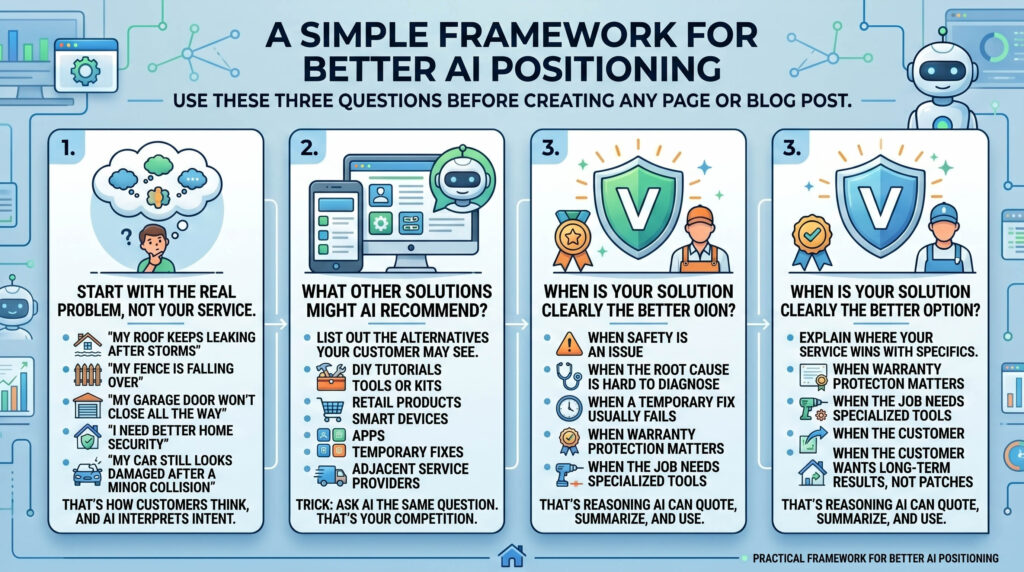
If you want an easy system, use these three questions before creating any page or blog post.
1. What problem is the customer really trying to solve?
Don’t start with your service. Start with the real problem.
Examples:
– “My roof keeps leaking after storms”
– “My fence is falling over”
– “My garage door won’t close all the way”
– “I need better home security”
– “My car still looks damaged after a minor collision”
That’s how customers think. That’s also how AI interprets intent.
2. What other solutions might AI recommend?
Be honest here.
List out the alternatives your customer may see:
– DIY tutorials
– tools or kits
– retail products
– smart devices
– apps
– temporary fixes
– adjacent service providers
A simple trick: ask ChatGPT, Google, or another AI tool the same question your customer would ask. Look at what it recommends.
That’s your real competition now.
3. When is your solution clearly the better option?
This is where your positioning needs to be specific.
Not “we provide quality service.” Every contractor says that.
Instead, explain where your service wins:
– when safety is an issue
– when the root cause is hard to diagnose
– when a temporary fix usually fails
– when warranty protection matters
– when the job needs specialized tools
– when the customer wants long-term results, not another short-term patch
That’s the kind of reasoning AI can quote, summarize, and use.
What This Looks Like in the Real World
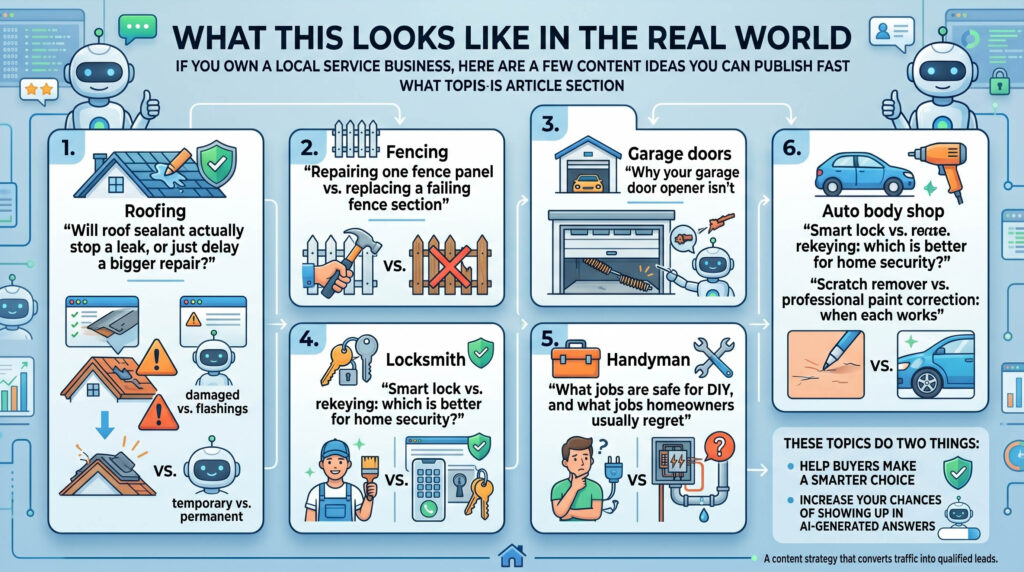
If you own a local service business, here are a few content ideas you can publish fast:
– Roofing: “Will roof sealant actually stop a leak, or just delay a bigger repair?”
– Fencing: “Repairing one fence panel vs. replacing a failing fence section”
– Garage doors: “Why your garage door opener isn’t the real problem”
– Locksmith: “Smart lock vs. rekeying: which is better for home security?”
– Handyman: “What jobs are safe for DIY, and what jobs homeowners usually regret”
– Auto body shop: “Scratch remover vs. professional paint correction: when each works”
These topics do two things:
– help buyers make a smarter choice
– increase your chances of showing up in AI-generated answers
If you’re evaluating local SEO services for small business websites, this is exactly the kind of content strategy that helps convert traffic into qualified leads.
Final Takeaway
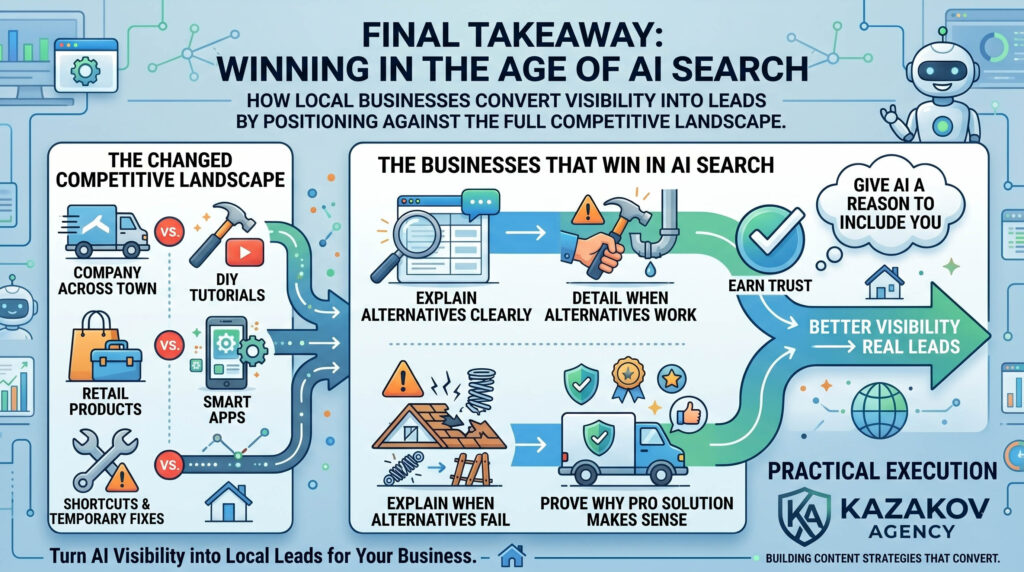
AI search has changed who you compete against.
You’re not just fighting the company across town anymore. You’re competing with every possible answer to the customer’s problem: products, tutorials, apps, shortcuts, and temporary fixes.
The businesses that win in AI search will be the ones that explain the full picture clearly:
– what the alternatives are
– when those alternatives work
– when they fail
– why a professional solution makes more sense in certain situations
That’s how you earn trust. And that’s how you give AI a reason to include your business.
If you want better visibility, don’t just describe your services. Position your business against the real choices your customers are already considering.
If your company needs help building that kind of content and turning AI visibility into real leads, Kazakov Agency can help.
Get Your Free Strategy Session
📌 Related Resources & Services
Main Service: Explore our comprehensive Local SEO Services.
Recommended Articles:
Next Step: Learn how we deliver measurable growth — Lawn Care & Landscaping Case Study.