How to Build a Demand Generation Strategy for Holiday Service Sales
Learning how to build a demand generation strategy is essential for contractors who want predictable holiday and seasonal revenue without relying exclusively on expensive, last-minute search clicks. Google’s July Demand Gen updates reinforce a larger opportunity: home service businesses can create demand earlier, nurture homeowners visually, and convert that interest when weather, travel, guests, or seasonal deadlines make the service urgent.
- Core problem: Build a full-funnel acquisition system before competitors drive up costs during peak season.
- Questions answered: Which audiences, offers, creative assets, campaign settings, landing pages, and measurements should a contractor use?
- Business benefit: Generate more qualified service opportunities, improve lead-to-booked-job rates, and reduce dependence on high-cost bottom-funnel advertising.
How to Build a Demand Generation Strategy Around Real Service Demand
Demand generation is not simply running awareness ads. It is the coordinated process of introducing a relevant problem, establishing your company as the credible solution, and giving the homeowner a compelling reason to act. Search advertising captures people already looking for a contractor. Demand generation expands the pool by reaching homeowners before they type “HVAC repair near me” or “holiday lighting installer” into Google.
For home service companies, effective demand generation starts with an operational reality: what profitable work can your team reliably deliver during the target period? An HVAC company might promote furnace tune-ups before the first freeze. A plumber can build Thanksgiving campaigns around drain inspections, water heater reliability, and guest-ready plumbing. Electricians may focus on panel capacity, outdoor lighting, generators, or EV charger installation.
Do not begin by choosing an advertising format. Begin with capacity, margins, service radius, seasonality, and the jobs you want. Media should support the business plan—not dictate it.
Define one commercially valuable objective
Select a primary outcome for each campaign, such as booked estimates, scheduled maintenance visits, qualified phone calls, or completed online appointments. “More traffic” is not a commercially useful objective. If your average installation produces $4,000 in gross profit, you can calculate an allowable acquisition cost. Without that number, campaign optimization becomes guesswork.
Turn the July Demand Gen Drop Into a Holiday Planning Advantage
Google’s Demand Gen evolution gives advertisers more ways to reach prospective customers across visually oriented Google inventory, including YouTube, Shorts, Discover, and Gmail. Depending on account eligibility and current platform availability, advertisers may also have access to expanded channel controls, creative options, product or feed-based formats, and deeper reporting.
The strategic lesson is more important than any single platform feature: holiday campaigns should launch before the peak buying window. Contractors frequently wait until demand is obvious. By then, auction competition is stronger, production calendars are tighter, and homeowners have already encountered competing brands.
Use July and late summer to prepare fall and holiday campaigns. Build creative, validate conversion tracking, develop remarketing audiences, and test offers while media costs and operational pressure are more manageable. For winter services, the ideal sequence often looks like this:
- July–August: Analyze previous-year revenue, identify high-margin services, and produce creative assets.
- September: Launch prospecting and educational messaging to qualified local audiences.
- October–November: Increase urgency, introduce seasonal offers, and retarget engaged homeowners.
- December: Shift spend toward available appointments, emergency needs, and deadline-driven services.
- January: Measure booked revenue, nurture unclosed leads, and convert seasonal customers into maintenance members.
Agency insight: A contractor does not need millions of impressions. The goal is repeated, credible exposure among homeowners inside a serviceable geography who are likely to need a profitable service.
Build Audiences From First-Party and High-Intent Signals
Broad reach can waste money when a company serves only selected ZIP codes. Start with precise location settings and exclude areas your technicians cannot serve profitably. Then organize audiences by intent and relationship to the business.
First-party audiences
- Previous customers eligible for maintenance, upgrades, or complementary services.
- Unclosed estimates that can be reactivated with a seasonal reason to reconsider.
- Website visitors segmented by service page, engagement, and recency.
- Callers and form leads who did not schedule or complete a job.
- Customer lists grouped by equipment age, service history, property type, or membership status.
Upload and use customer data only with appropriate consent, security, and compliance practices. First-party data is especially valuable because it reflects actual customer relationships rather than assumed interests.
Prospecting audiences
Create custom segments based on relevant search behavior, competitor research, service interests, and homeowner problems. An insulation contractor might target signals related to cold rooms, high heating bills, attic insulation, or energy-efficiency improvements. Avoid piling unrelated services into one audience. A narrow message aligned with a recognizable problem usually produces stronger engagement and cleaner learning.
Automated audience expansion can identify incremental opportunities, but it should be paired with accurate conversions and sufficient budget. Automation trained on spam calls or low-value forms will efficiently find more of the wrong leads.
Create Holiday Offers That Protect Margin
Discounting is not the only way to create urgency. The strongest contractor offers combine a relevant deadline, a low-friction next step, and a benefit the customer can understand quickly.
- Capacity deadline: “Schedule before November 15 for installation before holiday guests arrive.”
- Bundled value: Combine an inspection with a related safety or efficiency check.
- Financing message: Present approved financing options for larger replacement projects without making misleading affordability claims.
- Priority benefit: Offer maintenance members preferred scheduling or an added service benefit.
- Preventive angle: Frame the appointment around avoiding emergency breakdowns during travel, freezing weather, or family gatherings.
Every condition should be visible. State expiration dates, eligibility, service-area limitations, and financing requirements. Trust is a conversion asset, especially when homeowners are inviting a contractor into their property.
Design Creative for YouTube, Shorts, Discover, and Gmail
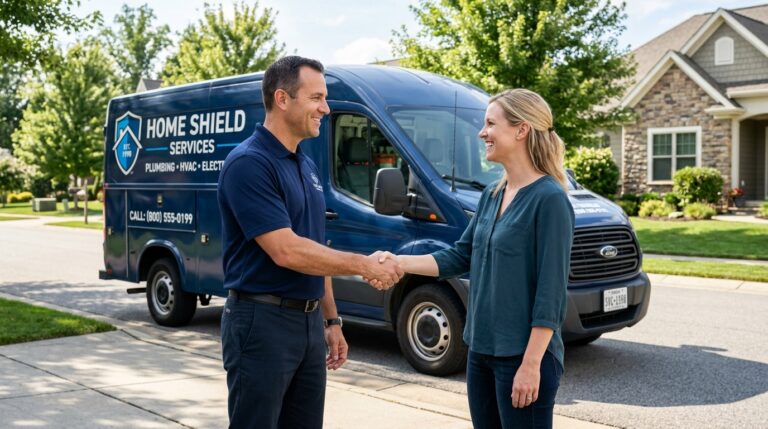
Demand Gen creative should make the homeowner recognize the problem within the first few seconds. Avoid generic stock footage of smiling technicians. Use real employees, branded vehicles, local homes with permission, actual equipment, and demonstrations that prove competence.
A practical creative framework
- Hook: Name a seasonal concern: “Hosting family this Thanksgiving? Check these three plumbing risks first.”
- Proof: Show a licensed technician explaining or inspecting the issue.
- Outcome: Demonstrate comfort, safety, reliability, or improved appearance.
- Offer: Present the service, qualification requirements, and deadline.
- Action: Tell viewers whether to call, schedule online, or request an estimate.
Produce vertical, square, and landscape assets rather than forcing one video into every placement. Add captions because many users watch without sound. Keep branding visible but do not let a logo animation consume the opening. Test customer testimonials, technician explanations, before-and-after visuals, and concise offer-led ads.
For example, a roofing company could run a 20-second video showing how minor flashing damage becomes an interior leak during winter storms. Engaged viewers then receive a testimonial ad, followed by an inspection offer with a scheduling deadline. That sequence creates demand instead of repeatedly showing the same sales message.
Connect Ads to a Conversion-Ready Local Experience
Do not send every visitor to the homepage. Create a landing page that mirrors the ad’s service, location, promise, and deadline. Include the company’s real phone number, service area, license information where applicable, review evidence, warranties, financing disclosures, and an uncomplicated booking path.
Mobile speed matters because many Demand Gen interactions occur on mobile devices. Forms should request only the information dispatch or sales teams need to take the next step. For urgent services, make the phone action prominent. For estimates and non-emergency projects, provide appointment or consultation options.
The operational handoff is equally important. A campaign cannot overcome missed calls, delayed estimates, or inconsistent follow-up. Establish response-time standards, record lead disposition in the CRM, and use call recordings for coaching and lead-quality reviews.
Measure Revenue Instead of Celebrating Cheap Leads
Platform lead totals rarely tell the full story. Configure conversion tracking for qualified calls, completed forms, online bookings, and chat leads. Then import downstream outcomes such as scheduled appointment, estimate issued, job won, and revenue when your CRM and privacy practices allow it.
Track these business metrics by campaign, service, location, and audience:
- Cost per qualified lead—not merely cost per form submission.
- Lead-to-booked-appointment rate.
- Appointment-to-sold-job rate.
- Customer acquisition cost.
- Average booked revenue and gross profit.
- Cancellation, spam, and out-of-area lead rates.
- New-customer value and maintenance-plan attachment rate.
Use attribution as directional evidence rather than perfect truth. Demand Gen can influence a homeowner who later searches the brand, calls from a Google Business Profile, or converts through another campaign. Review assisted conversions, branded search growth, direct traffic, and geographic lift alongside last-click results.
Set Budget, Tests, and Guardrails Before Launch
Separate prospecting from remarketing so each has a clear role and budget. Remarketing often reports stronger efficiency because the audience already knows the brand; allowing it to consume the entire budget can hide weak new-customer acquisition.
Run meaningful tests instead of changing targeting every few days. Test one major variable at a time: offer, opening hook, testimonial versus demonstration, audience theme, or landing-page structure. Give the system enough conversion data to learn, while monitoring lead quality and geographic accuracy from day one.
Establish guardrails for maximum acceptable acquisition cost, minimum qualified-lead rate, service capacity, and schedule availability. Reduce or redirect spend when crews are fully booked. Advertising beyond operational capacity can create poor reviews and squander future demand.
Your 30-Day Demand Generation Launch Plan
- Days 1–5: Choose one profitable seasonal service, define the target customer, calculate allowable acquisition cost, and confirm fulfillment capacity.
- Days 6–10: Audit conversion tracking, CRM stages, call handling, consent practices, and first-party audience quality.
- Days 11–15: Develop the offer, landing page, three creative concepts, and multiple aspect ratios.
- Days 16–20: Build separate prospecting and remarketing campaigns with accurate locations, exclusions, and conversion goals.
- Days 21–25: Launch with controlled budgets and review search behavior, placements, calls, forms, and lead disposition.
- Days 26–30: Shift budget toward qualified demand, replace weak creative, and report booked jobs—not vanity metrics.
The contractors that win holiday demand do not simply increase spend when temperatures drop. They educate the market early, earn recognition before the urgent search, and connect media performance to actual booked revenue. That is how demand generation becomes a repeatable growth system rather than another seasonal advertising experiment.
📌 Related Resources & Services
Main Service: Explore our comprehensive CRO & Landing Page Optimization.
Recommended Articles:
Next Step: Learn how we deliver measurable growth — Request a Custom Marketing Audit.