
7 AI Search Signals Local Contractors Can’t Afford to Ignore
Executive summary: AI-generated answers are changing how homeowners discover, compare, and shortlist local contractors, but the underlying visibility factors are more practical than mysterious. The most important ai search signals come from consistent business data, verified local relevance, detailed reviews, expert content, and third-party corroboration—all core components of effective Local SEO & Google Maps Services.
Contractors that strengthen these signals can become easier for Google, AI answer engines, and prospective customers to identify as credible choices within a specific service area.
Key Questions Answered & Business Benefits
- Which signals help AI systems understand and trust a local business?
- How can reviews, service pages, and business profiles reinforce one another?
- What content gives contractors a better chance of appearing in AI-generated recommendations?
- How should AI visibility be measured without relying on unreliable vanity metrics?
- Business benefit: stronger local discovery, more qualified leads, and a defensible presence across traditional and AI-assisted search.
The Most Important AI Search Signals Form an Evidence Network

AI search systems rarely evaluate a contractor from one webpage alone. They assemble evidence from the company’s website, Google Business Profile, major directories, review platforms, trade associations, local publications, social profiles, and other accessible sources. When these sources consistently describe the same company, services, locations, credentials, and reputation, the business becomes easier to identify and summarize with confidence.
This means the strongest ai search signals operate as a connected evidence network. A roofing company’s website might state that it performs storm-damage roof replacement in Plano, while its Google Business Profile lists roofing as the primary category, recent customers mention storm restoration in reviews, and a local chamber profile confirms the company’s address and ownership. Each source supports the others.
The opposite creates ambiguity. If the website promotes three cities, the business profile uses a broad regional description, directories contain an old phone number, and reviews mainly discuss unrelated handyman work, an AI system has less reliable evidence about what the company does and where it should be recommended.
Start with an evidence audit. Search the brand name, phone number, address, owner’s name, primary services, and combinations of the brand plus target cities. Document inaccurate listings, conflicting service descriptions, outdated profiles, duplicate entities, and third-party pages that Google can crawl. Industry reporting from Search Engine Land can also help marketing teams monitor how search interfaces and AI-generated results continue to evolve.
Entity Consistency Clarifies Who You Are and Where You Operate
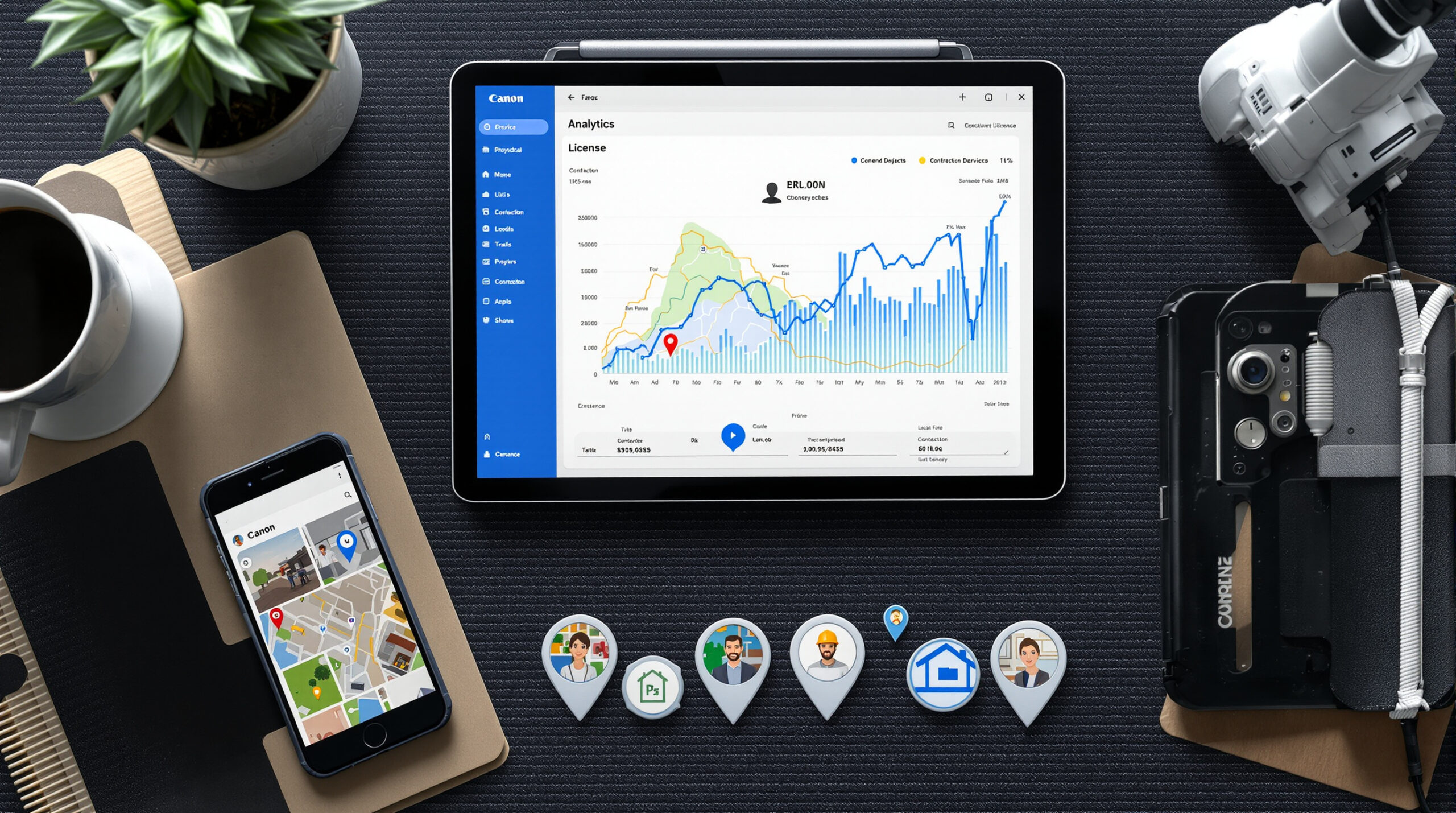
An entity is the recognizable business behind all its web references. For a local contractor, the basic entity signals include the official business name, address or legitimate service-area configuration, phone number, website, categories, operating hours, leadership, licenses, and geographic coverage. These details should be accurate and materially consistent—not artificially copied into every sentence on every platform.
Prioritize the sources most likely to shape local understanding: the Google Business Profile, website contact information, About page, service pages, location pages, state licensing records, Better Business Bureau profile where applicable, major aggregators, and respected industry directories. Correct factual conflicts before investing in more content. Publishing twenty new articles will not solve an old address or mismatched company name across prominent sources.
Service-area clarity is especially important. A contractor should not claim an entire state when crews realistically serve a defined group of counties or cities. Build a concise service-area hub, link it to genuinely useful location pages, and explain operational details such as typical project types, travel boundaries, permit familiarity, climate conditions, housing stock, or emergency availability. These specifics provide stronger geographic evidence than repeating a city name dozens of times.
Use LocalBusiness schema and the most accurate subtype available to describe verifiable facts, but treat structured data as clarification rather than a shortcut. Mark up only information visible on the page, keep URLs and business identifiers stable, and connect official profiles with appropriate sameAs references. Schema can help machines interpret facts; it cannot make unsupported claims trustworthy.
Review Specificity Is Stronger Than Review Volume Alone
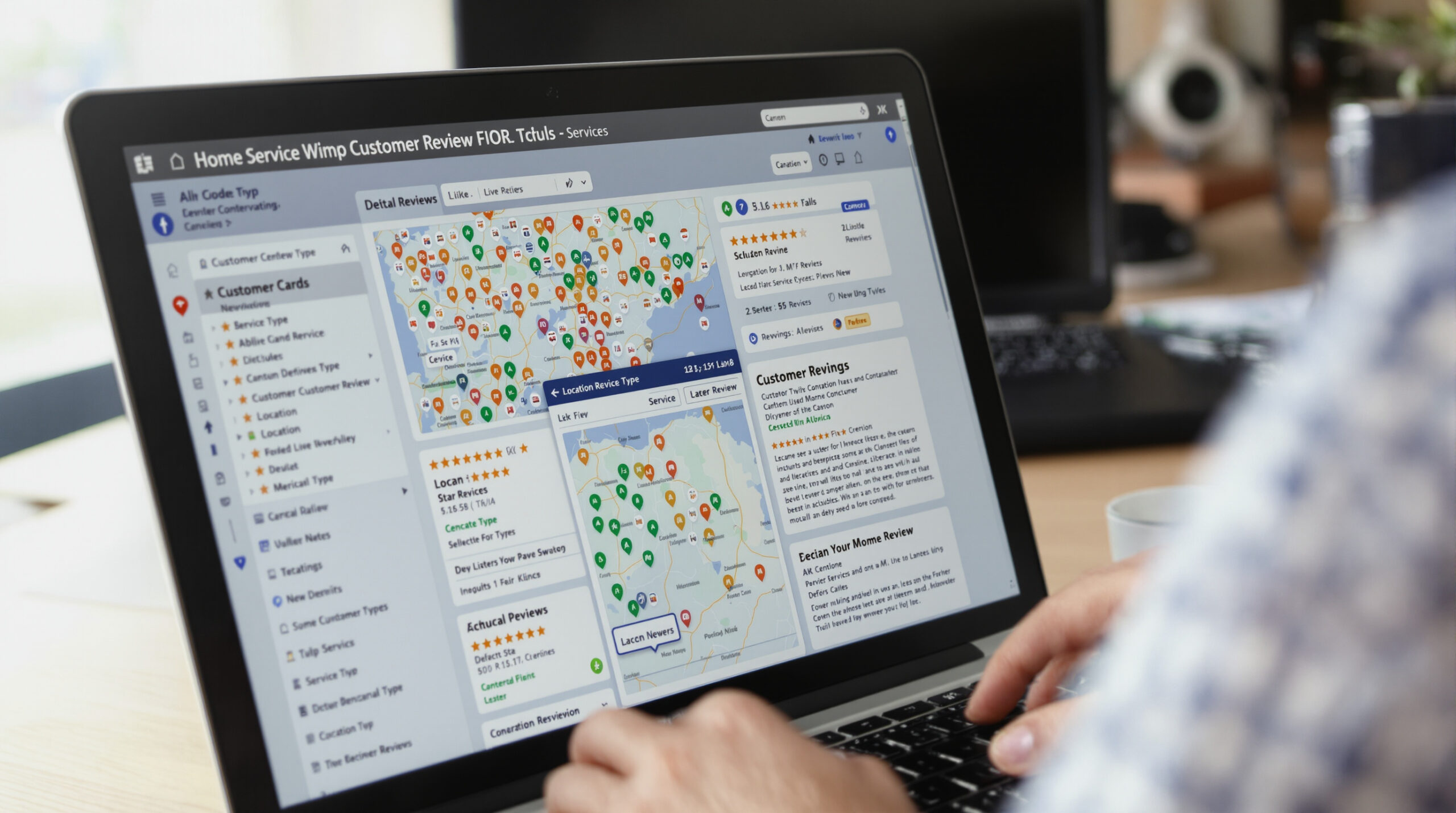
A large review count can support confidence, but detailed reviews reveal far more about real customer experiences. A review mentioning a heat-pump replacement, an older home in a named suburb, same-day diagnostics, permit coordination, and a clean installation contains service, location, process, and outcome signals. A one-line five-star rating provides much less context.
Contractors should never script customer opinions or offer prohibited incentives. Instead, improve the request itself. After completing a job, ask the customer to describe the service performed, the problem that prompted the call, the community where the work occurred, and what stood out about the experience. The customer must choose what to write, but a thoughtful prompt helps people remember useful details.
Review responses matter as well. Avoid templated replies stuffed with keywords. Confirm the relevant project naturally, thank the customer, acknowledge a specific detail, and explain any next step. For example, an HVAC company can thank a homeowner for trusting the crew with a two-zone mini-split installation and remind them how to reach the company for seasonal maintenance. That response is useful to the customer and reinforces legitimate service context.
Monitor patterns, not just averages. Categorize incoming reviews by service, city, customer concern, crew member, and outcome. If a plumbing company wants more water-heater leads but nearly every recent review discusses drain cleaning, the public evidence does not yet support the desired positioning. Marketing, operations, and review acquisition should work together to close that gap.
Expert Service Content Supplies Quotable Answers

Thin service pages often describe a company as reliable, affordable, and professional without answering the questions a homeowner actually has. AI answer systems need clear passages they can extract, compare, and attribute. Strong contractor content explains symptoms, options, constraints, costs, timelines, decision criteria, and local considerations in direct language.
For every priority service, build a page around the complete customer decision. An electrical panel upgrade page might explain warning signs, the difference between repair and replacement, load calculations, permit requirements, common project stages, expected disruption, warranty coverage, and factors affecting price. Add original photographs, diagrams, project examples, and commentary from a named subject-matter expert where they improve understanding.
Local experience should be demonstrated rather than announced. A foundation contractor can discuss soil movement common to the region, drainage patterns, slab construction, inspection procedures, and anonymized project outcomes. A roofer can explain how local wind ratings, hail exposure, municipal permits, and material availability influence recommendations. These are difficult-to-fake details that generic national content usually misses.
Use answer-first formatting: give the concise response, then explain conditions and exceptions. Descriptive headings, short definitions, comparison tables, ordered project steps, and focused FAQs make information easier for both people and machines to parse. Assign an expert reviewer, show a meaningful author biography, cite primary sources when making technical claims, and display a substantive update date only when the page has actually been reviewed.
One field observation can support several assets without creating duplicate filler. A service manager’s explanation of recurring compressor failures could become a detailed service-page section, a troubleshooting article, a short video, a technician checklist, and a Google Business Profile post. The underlying expertise remains consistent while the format changes for each channel.
Third-Party Corroboration Builds Trust Beyond Your Website

A company cannot establish all of its authority through self-published claims. Independent references help confirm that the business exists, serves the stated market, possesses relevant qualifications, and participates in the local or professional community. Useful corroboration can come from licensing agencies, manufacturer directories, trade organizations, chambers of commerce, suppliers, community partners, local news outlets, and legitimate project collaborators.
The objective is not to accumulate low-quality directory links. Pursue references that make sense in the real world. A manufacturer certification profile should accurately list the contractor’s status and location. A chamber profile should contain current contact details. A community sponsorship may earn a mention from a local nonprofit. A complex commercial project could result in a case study featuring the general contractor, architect, or supplier when all parties approve the publication.
Digital PR is most effective when it converts operational knowledge into locally relevant information. Before a severe weather season, a restoration contractor might provide a journalist with a factual homeowner inspection checklist. A plumbing company could publish anonymized data about the most common freeze-related failures observed during a cold snap. The value comes from original expertise and evidence, not from forcing an anchor-text link.
Audit existing affiliations before seeking new ones. Many contractors already have manufacturer relationships, association memberships, awards, community involvement, financing partners, or supplier profiles that are missing, inaccurate, or unlinked. Correcting these assets can create a cleaner corroboration layer faster than launching a broad link-building campaign.
Technical Accessibility and Measurement Complete the AI Visibility Strategy

Excellent evidence cannot help if important pages are inaccessible, duplicated, or difficult to interpret. Confirm that priority service and location pages return a successful status code, are indexable, use self-referencing canonicals where appropriate, load effectively on mobile devices, and receive internal links from relevant navigation and hub pages. Keep essential business information in crawlable HTML rather than hiding it exclusively inside images, scripts, or third-party widgets.
Control duplication deliberately. Contractors commonly create near-identical city pages, conflicting service URLs, staging-domain copies, print versions, and parameterized pages. Consolidate overlapping pages when they satisfy the same intent. If individual location pages remain, each should contain distinct operational information, proof, project context, and customer guidance—not merely swapped place names.
Measurement requires more than checking whether a brand appears in one chatbot response. AI outputs can vary by platform, location, query wording, personalization, and date. Establish a repeatable monthly query set covering service discovery, comparisons, symptoms, cost questions, emergency needs, and location modifiers. Record whether the company is mentioned, which sources are cited, which competitors appear, and whether the description of the business is accurate.
Connect visibility observations to business outcomes. Segment organic and local leads by landing page, service, geography, lead quality, booked appointment, and estimated revenue. Track branded-search growth, Google Business Profile actions, assisted conversions, call recordings, form submissions, and qualified pipeline. Use these metrics to determine whether stronger AI search signals are producing commercially meaningful demand rather than screenshots with no attributable value.
A practical 90-day plan begins with entity and citation corrections, followed by review-process improvements and upgrades to the highest-revenue service pages. The next phase adds local proof, expert-reviewed answers, and credible third-party references. Technical validation and monthly prompt tracking then show where evidence is strengthening—and where an AI system still lacks enough clarity to recommend the business confidently.
📌 Related Resources & Services
Main Service: Explore our comprehensive Local SEO & Google Maps Services.
Recommended Articles:
Next Step: Learn how we deliver measurable growth — Fencing Contractor Lead Gen Case Study.
