
Why Most Home Services Website Pages Don’t Generate Leads — and How to Fix It
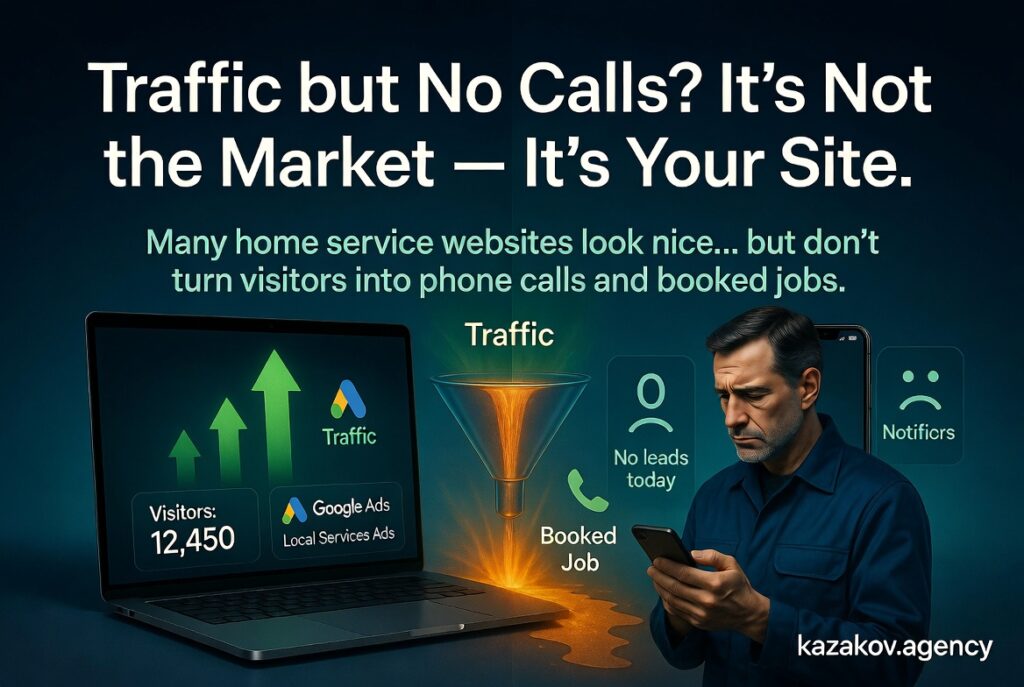
If your home services website gets traffic but your phone is still quiet, the problem usually isn’t the market. It’s the site.
A lot of home service businesses invest in a website, run Google Ads or Local Services Ads, and expect leads to show up. But many sites are built to look “nice,” not to turn visitors into calls, form fills, and booked jobs.
The good news: this is fixable. In most cases, a few smart changes can improve lead flow fast.
What’s Going Wrong on Most Contractor Websites
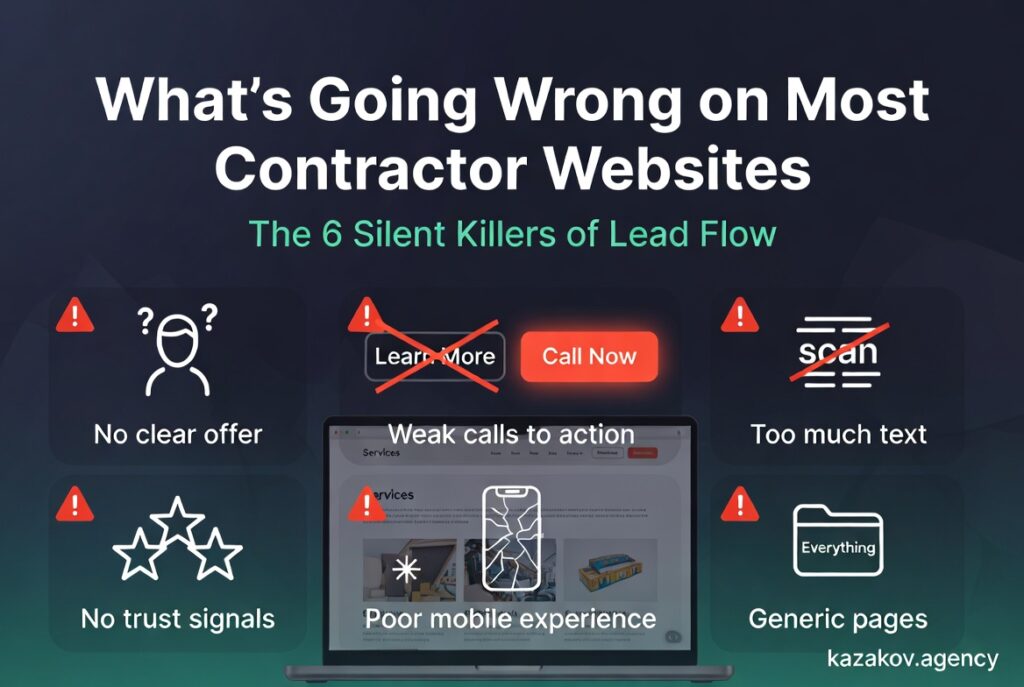
Most underperforming websites have the same problems. They confuse visitors, hide key information, or make it harder than necessary to contact you.
Here are the biggest issues:
- No clear offer: The homepage says what the company does, but not why someone should choose them now.
- Weak calls to action: Buttons say “Learn More” instead of “Call Now” or “Get a Free Estimate.”
- Too much text: Visitors don’t read walls of copy. They scan.
- No trust signals: No reviews, no project photos, no badges, no proof.
- Poor mobile experience: Most local service traffic comes from phones. If the site is slow or hard to use, leads disappear.
- Generic pages: One service page for everything usually means weak SEO and low conversion rates.
What a Home Services Website Needs to Generate Leads
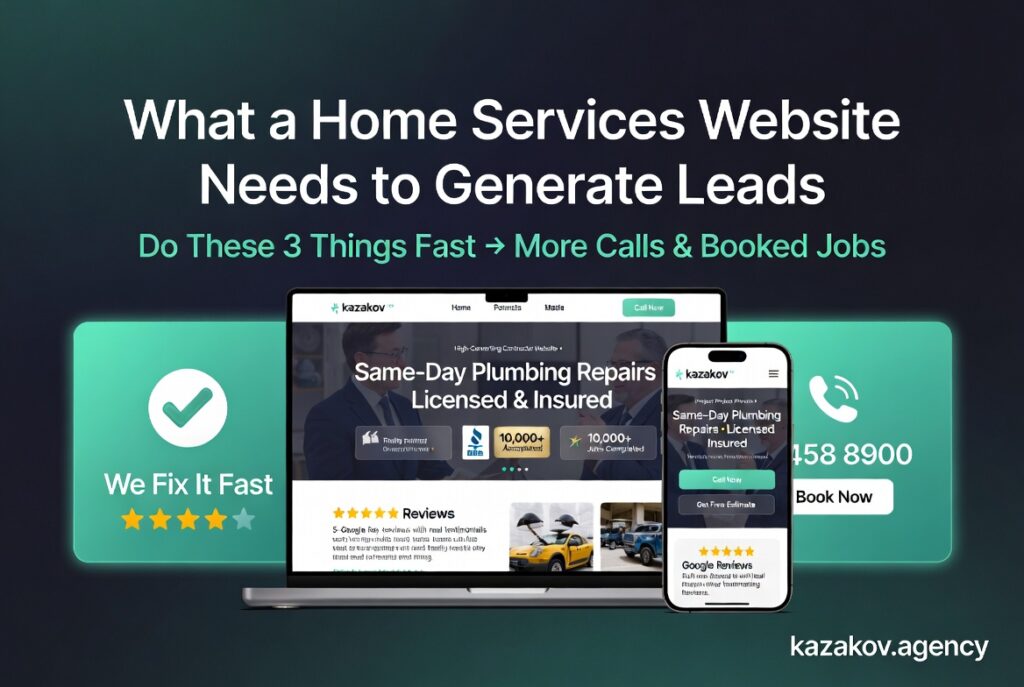
A good contractor website should do three things fast:
- Show the visitor they’re in the right place
- Build trust quickly
- Make it easy to contact you
That’s it. If your site does those three things well, it will produce more leads.
Start With a Strong Homepage Message

When someone lands on your site, they should understand your business in 5 seconds.
A strong homepage headline usually includes:
- What you do
- Who you serve
- What the next step is
Example:
Roof Repair and Replacement in Dallas, TX — Free Inspections, Fast Turnaround

That works better than something vague like:
Quality You Can Trust
The second one sounds nice, but it doesn’t help a homeowner know they’re in the right place.
Make Your Calls to Action Obvious
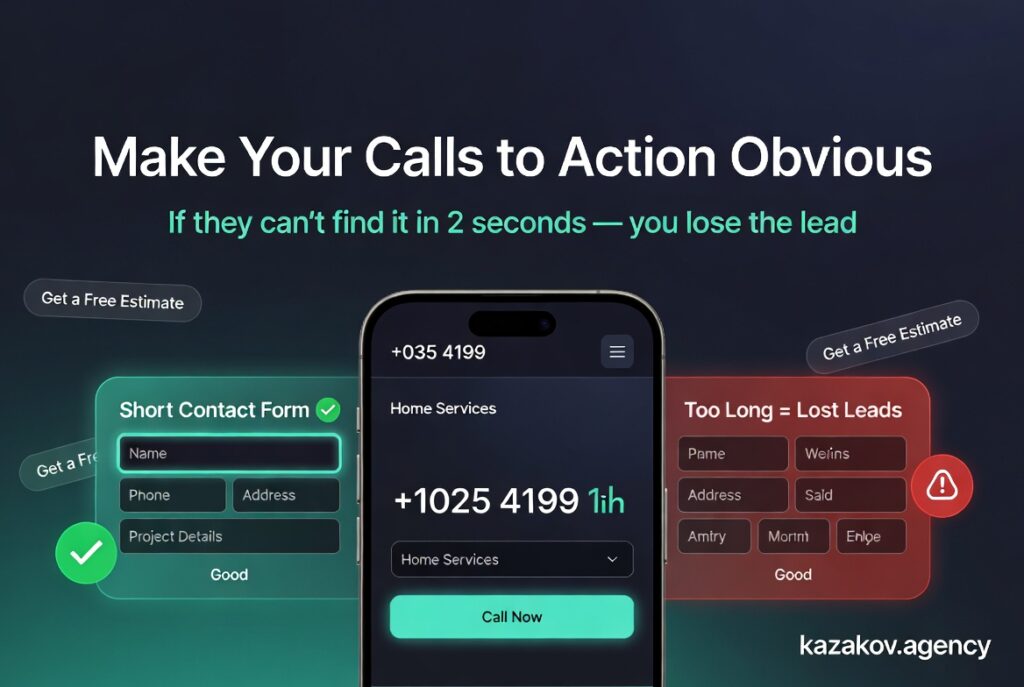
If people have to search for your phone number, quote form, or service area, you’ll lose leads.
Your main call to action should be visible at all times, especially on mobile.
Best practices:
- Put your phone number in the top header
- Use a sticky “Call Now” button on mobile
- Add “Get a Free Estimate” buttons throughout the page
- Keep contact forms short
- Repeat the CTA after every major section
A long form with 10 fields is usually a mistake. For most home service businesses, name, phone, address, and project details are enough.
Use Trust Signals Everywhere
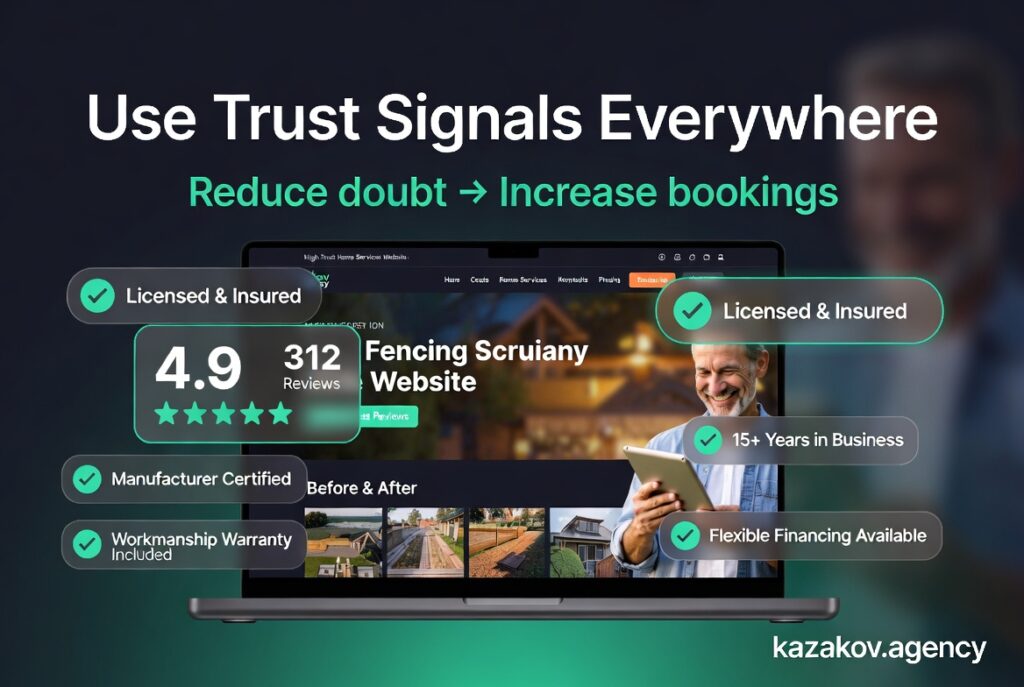
People hire contractors they feel comfortable with. Your website should reduce doubt.
Add trust builders like:
- Google review rating
- Before-and-after photos
- Real jobsite pictures
- Licensing and insurance info
- Manufacturer certifications
- Warranties and guarantees
- Years in business
- Financing options
Example:
A fencing company that shows 4.9-star Google reviews, local install photos, and a “Workmanship Warranty Included” message will usually outperform a competitor with stock images and no proof.
Build Separate Pages for Each Service
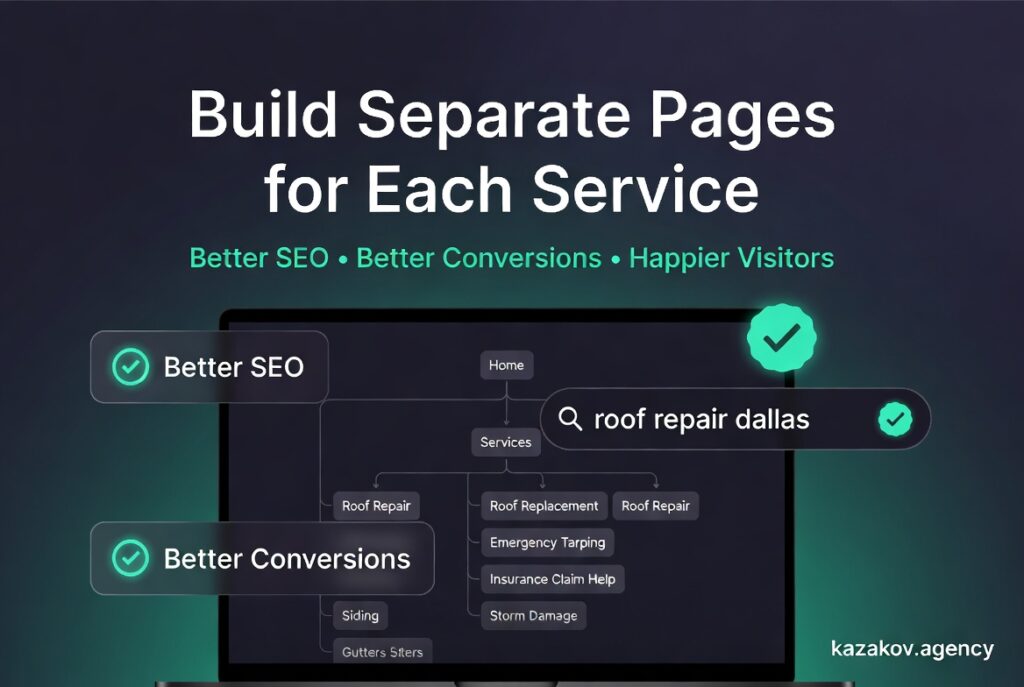
If you offer roofing, siding, gutters, and storm damage repair, don’t put everything on one page.
Create a separate page for each service. This helps in two ways:
- Better SEO: Google can rank a specific page for a specific search
- Better conversions: Visitors land on a page that exactly matches what they need
Good example service pages:
- Roof Repair
- Roof Replacement
- Emergency Tarping
- Insurance Claim Help
The same logic applies to garage door repair, fence installation, locksmith services, handyman work, and auto body repair.
A well-structured home services website also makes it easier to organize these pages so both Google and potential customers can find what they need faster.
Don’t Ignore Location Pages
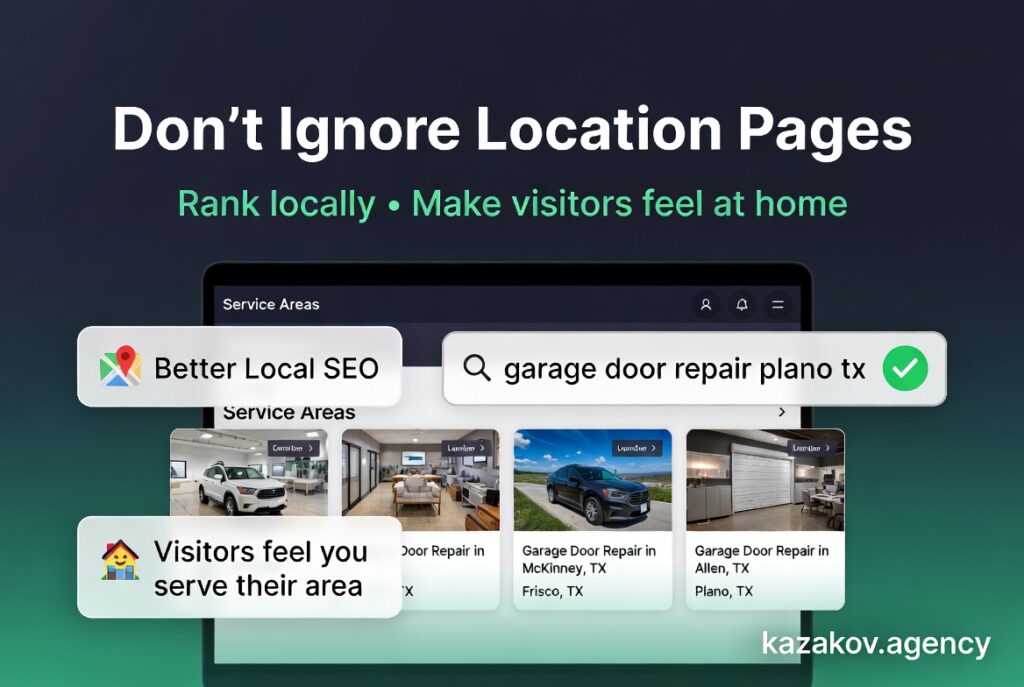
Many contractors serve multiple cities but only mention one location on the site.
That leaves money on the table.
If you work in several towns or suburbs, build dedicated location pages for each main service area.
Example:
- Garage Door Repair in Plano, TX
- Garage Door Repair in Frisco, TX
- Garage Door Repair in McKinney, TX
These pages can help you rank locally and make visitors feel like you actually work in their area.
Just make sure each page is unique. Don’t copy and paste the same text and swap the city name.
Fix Mobile Speed and User Experience
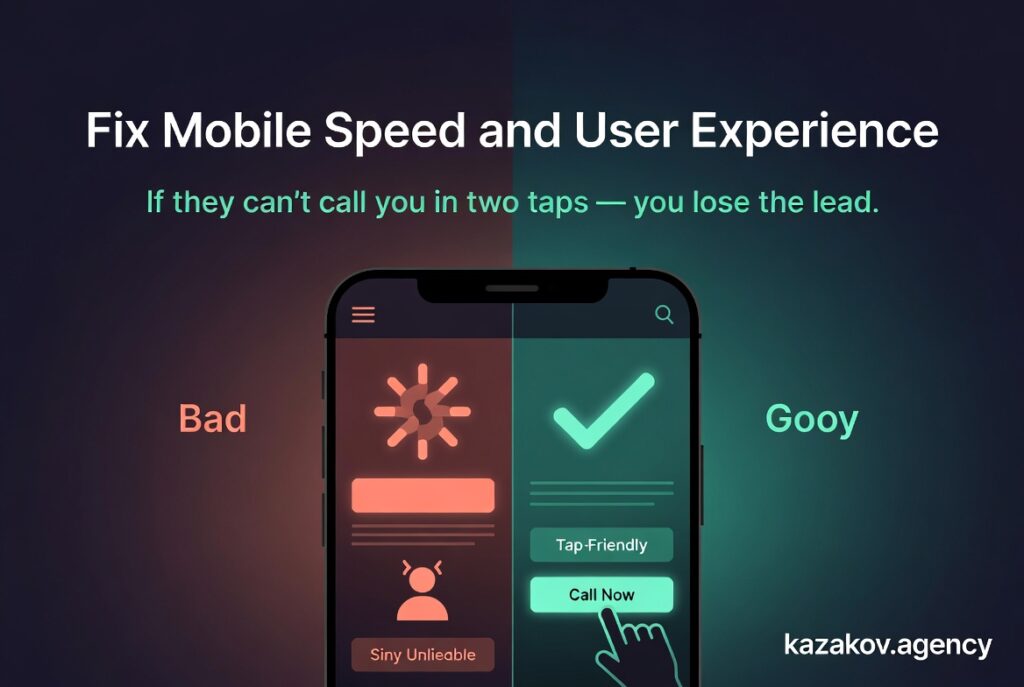
A lot of local traffic comes from Google search on mobile. If your site loads slowly, users leave before they even see your offer.
Common issues that hurt mobile conversion:
- Oversized images
- Cluttered design
- Forms that are hard to fill out
- Tiny buttons
- Popups that cover the screen
Simple improvements:
- Compress images
- Use large tap-friendly buttons
- Keep text short
- Make phone numbers clickable
- Test every page on your own phone
If a homeowner can’t call you in two taps, the site needs work.
Track What Actually Brings Leads

A website should not be a guessing game.
You need to know:
- Which pages get traffic
- Which traffic sources bring leads
- How many calls and form submissions you get
- Which campaigns turn into real jobs
At minimum, set up:
- Google Analytics
- Google Search Console
- Call tracking
- Form submission tracking
Without tracking, it’s hard to improve results because you’re making decisions based on opinions, not data.
For any home services website, tracking is what turns random marketing activity into a repeatable lead-generation system.
A Simple Website Fix Checklist
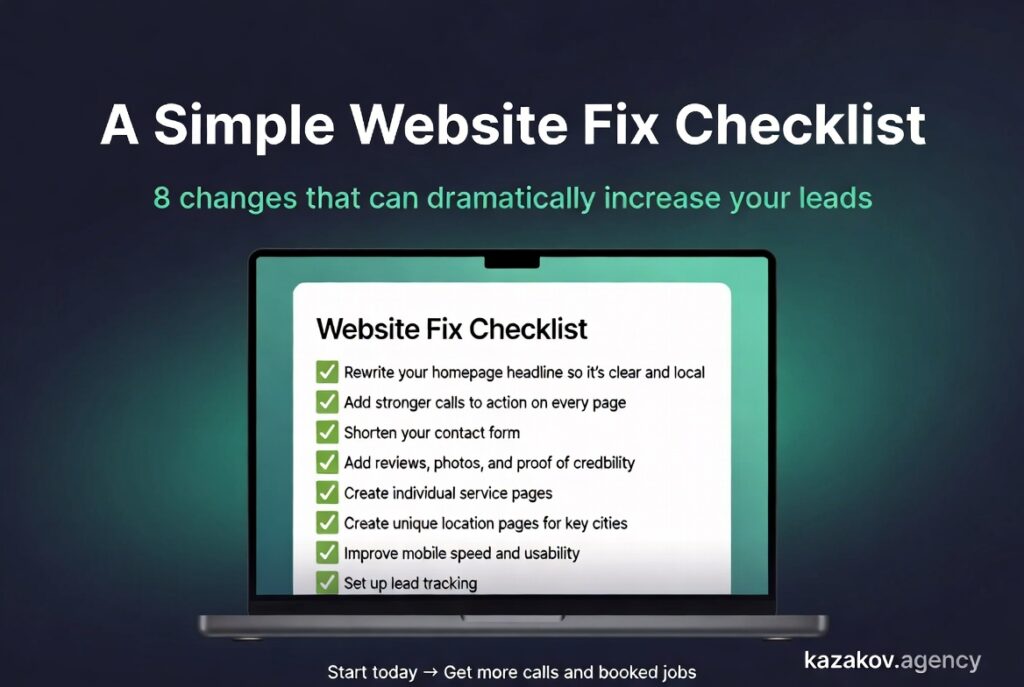
If you want more leads without rebuilding everything, start here:
- Rewrite your homepage headline so it’s clear and local
- Add stronger calls to action on every page
- Shorten your contact form
- Add reviews, photos, and proof of credibility
- Create individual service pages
- Create unique location pages for key cities
- Improve mobile speed and usability
- Set up lead tracking
These are not complicated changes, but they make a big difference.
Final Thought
Most home service websites don’t fail because the business is bad. They fail because the site doesn’t clearly sell trust, urgency, and ease.
Your website should work like your best salesperson: clear, helpful, local, and focused on getting the job.
If your home services website looks fine but isn’t bringing in enough calls or quote requests, it’s probably time for a conversion-focused rebuild or cleanup.
Get Your Free Strategy Session
Kazakov Agency helps home service businesses turn underperforming websites into lead-generating assets with better SEO, stronger landing pages, and smarter conversion strategy.
📌 Related Resources & Services
Main Service: Explore our comprehensive CRO & Landing Pages.
Recommended Articles:
Next Step: Learn how we deliver measurable growth — GA4 & GTM Conversion Tracking Setup.